

Athleisure or Streetwear? A Style Line Worth Drawing
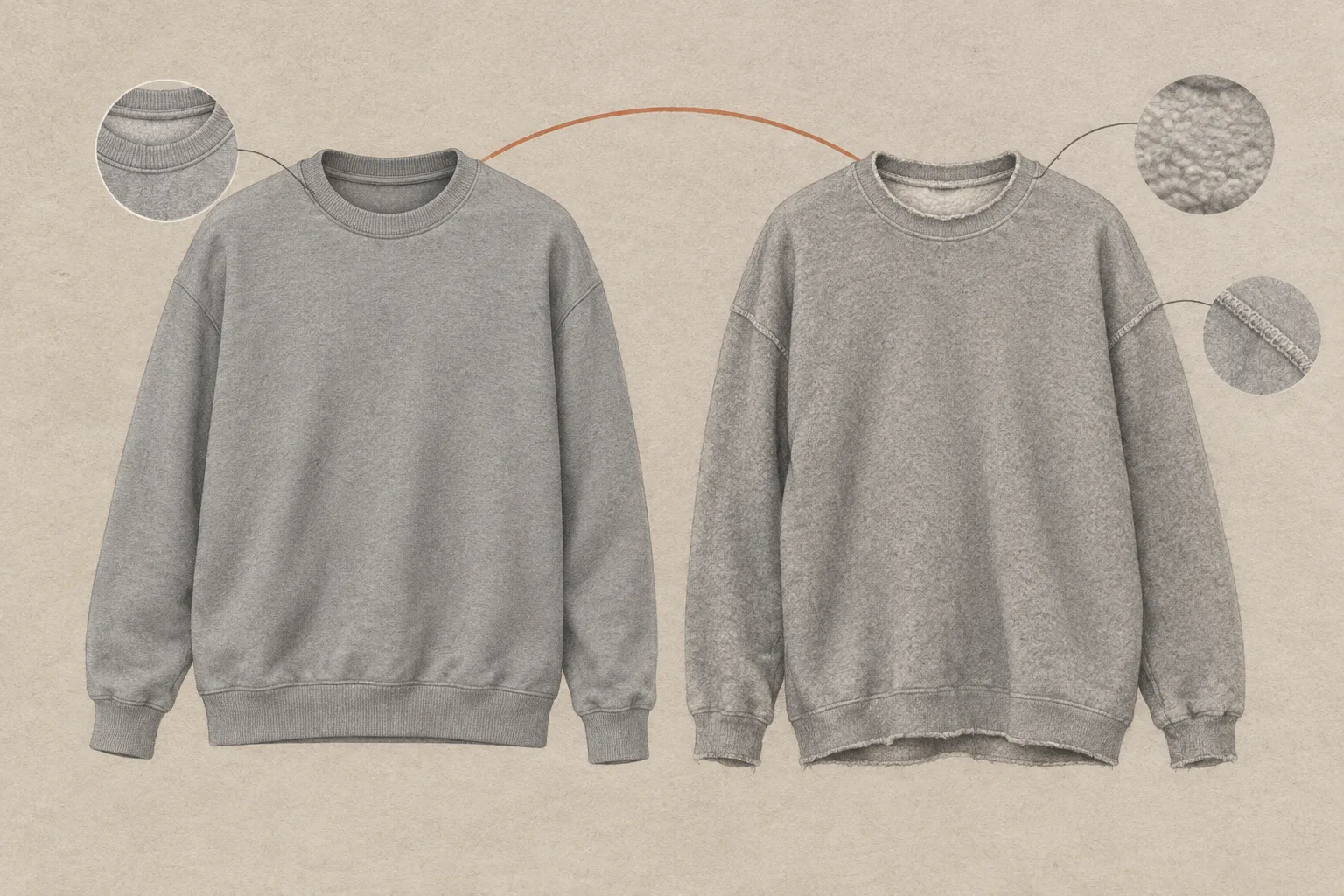
The gray sweatshirt that sells for 90 dollars and the gray sweatshirt that sells for 900 dollars sit four feet apart in the same store and belong to different universes. One is cut from loopback cotton with a dropped shoulder and a slightly cropped hem, tagged with a brand that also makes running shorts. The other is cut from a heavier fleece, finished with a raw edge, and photographed on a model standing in a parking garage. A shopper who does not know the codes could mistake one for the other. The difference is not quality, mostly. It is grammar.
Athleisure and streetwear get used interchangeably in retail copy and in the mouths of people who should know better. They overlap in silhouette, in fabric, in the fact that both are sold in the same climate-controlled store on the same Saturday afternoon. But they are doing different things, and the confusion costs people money and self-respect. Drawing the line is worth the trouble.
What Each Word Actually Names
Athleisure is a portmanteau of athletic and leisure, and the word arrived in the late 2010s to describe clothing engineered for movement that had been adopted for everything else. Its parent is sportswear. The defining feature is function that has been relaxed: yoga pants worn to the grocery store, a zip-up worn to the airport, a running shoe worn to a restaurant. The garment still remembers its job. The seam placement, the four-way stretch, the moisture-wicking panel, all of it was designed for a body in motion and then repurposed for a body standing still.
Streetwear descends from a different lineage entirely: skate culture, hip-hop, surf, and the small independent brands that dressed those scenes in the 1980s and 1990s. Its parent is subculture. The defining feature is signal. A streetwear garment is built to communicate membership, taste, and a relationship to a specific scene, whether that scene is a skate park in Los Angeles or a record store in Tokyo. Function is secondary, sometimes irrelevant. A boxy heavyweight tee with a screen-printed graphic is not engineered for movement. It is engineered to be seen.
Put plainly: athleisure is a category of use, and streetwear is a category of meaning. That distinction explains almost every confusion that follows.
The Fabric Tells the Story First
Run a hand over the two garments and the split becomes physical. Athleisure leans on performance knits: jersey, spandex blends, brushed fleece with a smooth face, ripstop nylon, anything with a bit of give and a matte finish. Stretch is the tell. Pick up a pair of athleisure trousers and the waistband snaps back. The fabric moves with the leg.
Streetwear leans on weight and structure. Heavyweight cotton, 12-ounce fleece, raw denim, canvas, corduroy, garment-dyed pieces that stiffen slightly after a wash. The fabric holds a shape rather than following one. A streetwear hoodie stands away from the body at the shoulder. It has a certain boxiness that reads as deliberate. The seams are often flat-felled and visible. The fabric does not breathe so much as it sits there, asserting itself.
This is why the same person can look wrong in one and right in the other. A body used to the drape of athletic fabric will feel encased in a 14-ounce hoodie. A body used to the structure of streetwear will feel underdressed in a soft performance knit, as if it forgot to put on real clothes.
Fit and Silhouette Diverge at the Shoulder
Athleisure is close to the body. It follows the line of the shoulder, tapers at the waist or the ankle, and uses compression where compression helps. The silhouette is athletic, which is to say it flatters a body that is already moving. A jogger tapers. A fitted zip-up hugs the torso. The whole point is that the garment disappears into motion.
Streetwear is deliberately oversized or deliberately cropped, and often both at once. The dropped shoulder is the signature. A streetwear tee has a sleeve seam that falls somewhere around the bicep, which makes the wearer look narrower through the chest and wider through the arms. The body is wide and short, or long and wide, and the proportions are chosen to read as a stance rather than a fit. A 5-foot-9 man in a streetwear hoodie can look like he is standing in a slightly different posture than the same man in an athleisure pullover.
This is the single most reliable visual test. Look at the shoulder seam. If it sits at the edge of the shoulder, the garment belongs to athleisure. If it drops down the arm, it belongs to streetwear.
Branding Behaves Differently on Each
Athleisure brands tend to under-brand. The logo is small, tonal, or absent. A tiny mark on the chest, a wordmark on the waistband, a reflective strip. The garment is supposed to read as clothing, not as advertising. The brand trusts the cut and the fabric to do the work, and the wearer is buying a piece of kit more than a piece of identity.
Streetwear brands put the graphic at the center. The logo is the point. A screen-printed back graphic, a chest hit, a repeating pattern, a collaboration with an artist or a band or another brand. The garment is a billboard for a sensibility, and the wearer is buying into a conversation. This is why streetwear drops sell out in minutes and athleisure restocks quietly for years. One is a product cycle. The other is a release schedule.
There is a practical consequence. An athleisure piece with a giant logo is usually a mistake, a brand reaching for meaning it has not earned. A streetwear piece with no visible branding at all is often the most expensive thing in the store, because the absence is itself a signal to the people who know.
Where the Two Categories Genuinely Blend
The line is real, but it is not a wall. Several garments sit in the overlap and have for years. The tracksuit is the classic case: born in athletic wear, adopted by hip-hop and football terraces, and now sold by both kinds of brand with slightly different intentions. A nylon track jacket with a small chest logo is athleisure. The same jacket with a large back embroidery and a slightly boxier cut is streetwear. The fabric is identical. The intent is not.
The chunky sneaker is another. Performance running shoes are athleisure by definition. The deliberately oversized, panel-heavy sneakers that dominated the late 2010s borrowed the language of performance and used it as decoration. They were not built to run in. They were built to be looked at. That is streetwear wearing an athleisure costume.
And then there is the plain heavyweight tee, which belongs to streetwear when it is cut boxy and sold in a drop, and to athleisure when it is cut slim and sold next to the running shorts. The same cotton, two different grammars.
Why the Confusion Costs Money
The overlap is where people get quietly fleeced. A shopper who wants the effortless look of athleisure but buys a streetwear piece will end up with a garment that feels stiff, sits oddly, and does not move. A shopper who wants the cultural signal of streetwear but buys an athleisure piece will end up with something that reads as gym clothes at a dinner table.
There is also a resale problem. Streetwear holds value in ways athleisure almost never does, because the value is tied to scarcity and scene rather than to fabric. A limited hoodie can resell for multiples of its retail price. A performance pullover, however well made, depreciates the moment it is worn. Buying athleisure expecting streetwear returns is a common and expensive misunderstanding.
The reverse mistake is subtler. Buying streetwear for the comfort of athleisure, then discovering that a 14-ounce fleece is not what a person wants to wear on a humid afternoon. The garment is not defective. It was made for a different job.
A Working Rule for the Wardrobe
Ask what the garment is for before asking what it looks like. If the answer involves movement, weather, or a body in transit, athleisure is the right drawer. If the answer involves a scene, a stance, or a conversation, streetwear is. Most people need both, and the mistake is treating them as one drawer.
The rule holds up in the store. Pick the piece up. Does it stretch and spring back? Athleisure. Does it hold its shape and stand away from the hand? Streetwear. Does the shoulder seam sit at the edge or drop down the arm? Does the logo whisper or shout? The garment will answer before the price tag does.
The Gray Sweatshirt, Revisited
Back to the two gray sweatshirts four feet apart. The 90-dollar one will be worn to a coffee shop, to a flight, to a Saturday errand, and it will look correct in all three because it was built to disappear into a life. The 900-dollar one will be worn to a specific kind of room, photographed, and treated as an object. Both are legitimate purchases. Only one of them is a mistake if the buyer wanted the other.
The line between athleisure and streetwear is worth drawing because it is the line between clothing that serves a body and clothing that says something to a room. A person can cross it deliberately, in either direction, and look excellent. What a person cannot do is cross it by accident and expect the garment to forgive the error. The fabric will not stretch. The shoulder seam will not move. The logo will not quiet down. The sweatshirt knows which universe it belongs to, even when the shopper does not.