

Cost Per Wear: The Activewear Pieces That Pay Off
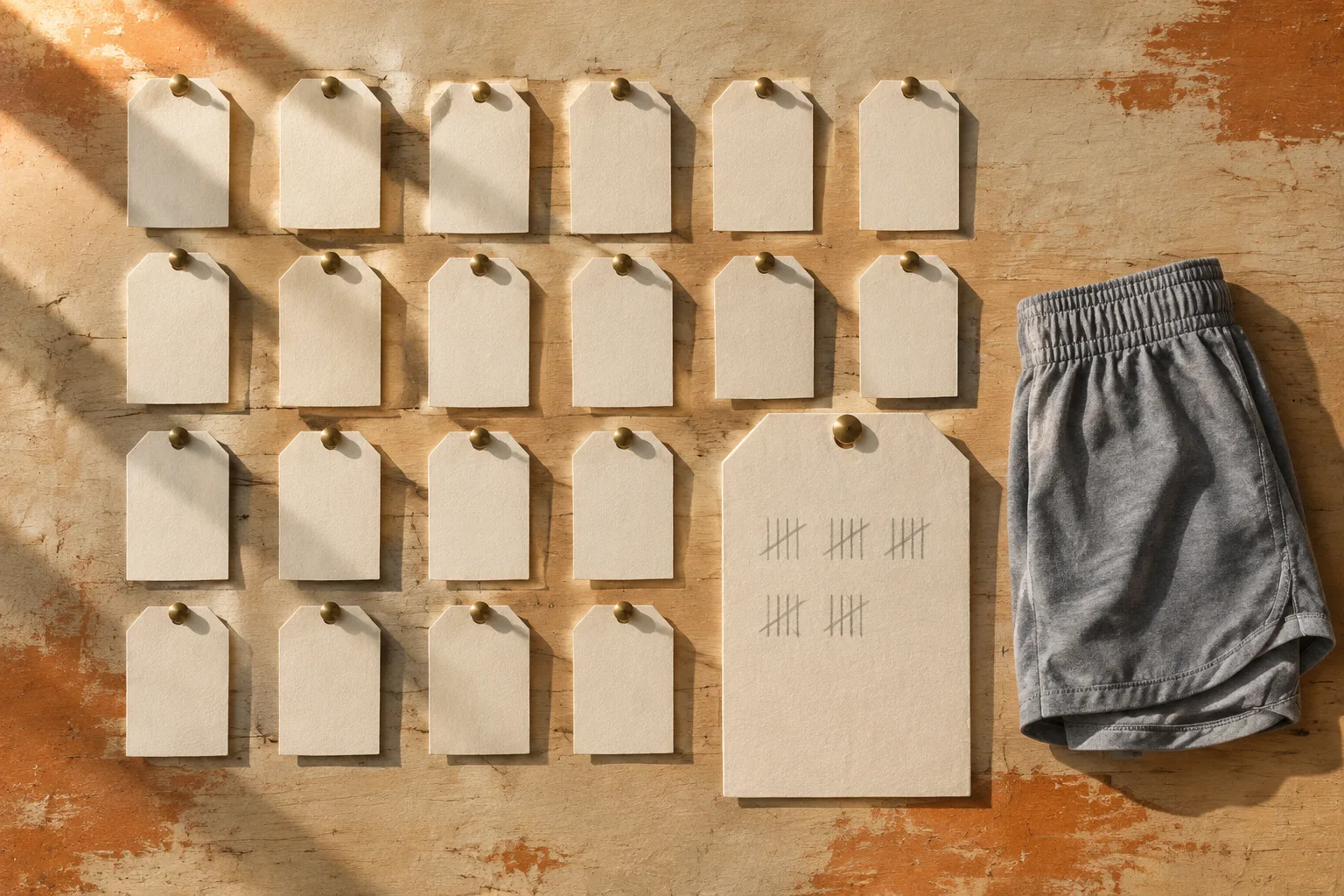
Sixty dollars for a pair of running shorts. The number sits there on the tag, and the arithmetic that follows is predictable: two runs a week for a year, then maybe another year before the elastic goes, and the cost lands somewhere near sixty cents per outing. That math is easy and also a little dishonest, because it assumes the shorts survive the wash cycles, the chafing, the lost weekend, and the sudden conviction that they are too short for the neighborhood. Cost per wear is a useful lens, but it only tells the truth when the garment actually gets worn. Activewear is where that assumption breaks most often.
The category is unusually good at producing closet dead weight. A tech tee bought for a race gets worn once and then becomes a pajama top. A pair of leggings that felt compressive in the fitting room turns out to be a sauna in August. The piece that pays off is the one that gets reached for on the ordinary Tuesday, not the one that looks best in a photograph. That distinction separates the genuine workhorses from the expensive mistakes, and it has less to do with brand than with a handful of physical properties that survive repeated use.
The Wash Cycle Is the Real Cost
Most people count wears and stop there. The more accurate ledger counts washes, because activewear takes a beating in the machine that other clothing mostly avoids. Heat degrades elastane. Detergent residue stiffens synthetic knits. A garment that gets tossed in with towels and dried on high will lose its shape long before its seams fail. The effective cost per wear for a piece washed hot and dried hard can be double what the label math suggests, because it retires early.
This is why the pieces that pay off tend to share a quiet characteristic: they tolerate neglect. A merino blend tee that can air dry overnight and be worn again the next morning does more work than a fancy polyamide number that needs gentle handling. The best activewear is boring in the laundry room. It goes in cold, comes out cold, hangs to dry, and is ready by the next session. That routine adds wears without adding fuss, and it stretches the effective life of anything with stretch fibers in it.
Where the Money Actually Holds Up
Three categories reliably earn their price over years: shoes, sports bras, and a single good outer layer. Running shoes are the clearest case. A pair that fits properly and matches a person's gait can carry several hundred miles before the midsole compresses, and the cost per mile drops into pennies. The same shoe bought on sale but in the wrong width becomes a blister factory by week three, gets relegated to dog walks, and never repays its discount. Fit beats price every time in footwear.
Sports bras follow a similar logic, with the added complication that support degrades silently. The band stretches, the straps loosen, and the wearer keeps wearing it past the point where it does its job. A well-made bra with a firm band and adjustable straps might cost three times a cheap one and last four times as long, which makes the cheap one the expensive choice. The payoff here is measured in comfort and in the absence of the small distractions that ruin a workout.
The outer layer is the sleeper. A lightweight, packable shell that blocks wind and sheds a drizzle gets worn on commutes, on walks, on cold-morning runs, and over everything else in between. It has the widest range of use of any technical garment, which is exactly why its cost per wear collapses so fast. A shell worn three times a week through two autumns and a spring has already paid for itself many times over. The key is that it fits over a base layer without ballooning, and that its fabric does not turn crinkly and loud after a dozen washes.
The Leggings Problem
Leggings are where cost per wear math gets emotional. A $100 pair worn twice a week for two years works out to about fifty cents a wear, which sounds excellent until the seam at the inner thigh gives out at month fourteen. The failure point is rarely the fabric itself. It is the stitching, the waistband elastic, or the point where the gusset meets the leg. A cheaper pair that fails the same way is not a bargain, but an expensive pair that fails is a grudge.
The leggings that pay off tend to be heavier in the knit, with flatlock seams and a wide, firm waistband that does not roll. They cost more up front and feel slightly less silky in the hand. That trade is worth making. A denser knit resists pilling between the thighs, which is the most common cosmetic death of a legging, and it holds its opacity through squats and stretches. A thin, buttery pair feels wonderful for a month and then shows every flaw.
There is a secondary calculation here about the number of pairs. Owning three good leggings and rotating them beats owning seven mediocre ones, because rotation gives each pair a rest day and doubles its useful life. The same logic applies to socks and to base layers. A smaller, better rotation almost always wins on cost per wear, and it makes the closet easier to use in the dark at six in the morning.
The Pieces That Rarely Pay Off
Anything with a narrow use case struggles. A waterproof shell built for alpine storms is overkill for a city commute and gets worn twice a season. A pair of compression tights designed for recovery has a real purpose but a small number of occasions. A technical tee with a race logo is a souvenir, and souvenirs are fine, but they should not be counted as wardrobe workhorses. The category is full of gear that solves a problem the wearer does not actually have.
Trend-driven activewear also tends to underperform. The matching set in a seasonal color looks great for a few months and then reads as dated. Neutral colors in simple cuts get worn for years. This is not a argument for dressing like a catalog model. It is a observation about how often a garment gets chosen when it does not call attention to itself. The plain black legging and the gray shell get picked up far more often than the neon set, and frequency is the whole game in cost per wear.
A Practical Way to Run the Numbers
The honest calculation is not price divided by an optimistic guess. It is price divided by the number of times the piece actually left the house in the first year, then adjusted for how many years it plausibly survives at that rate. A jacket worn twice a week for two years does about two hundred outings. At $180, that is under a dollar a wear. A $40 jacket worn six times is nearly seven dollars a wear. The expensive piece wins by a wide margin when it is the one that gets used.
There is a quick test that avoids most mistakes. Before buying, picture the specific occasions in the next month when the piece would be worn. If the list is short or vague, the cost per wear will be high no matter what the tag says. If the list is long and specific, the price matters less. This test is harder than it sounds because it requires honesty about how a person actually spends their time, not how they imagine they might.
Repair Changes the Arithmetic
A small repair can add years to a piece that would otherwise be retired. A blown seam on a legging is a ten-minute fix at a tailor. A stretched waistband on a pair of shorts can sometimes be replaced. A zipper pull that fails on a shell is a cheap swap. The willingness to repair is what separates a wardrobe that accumulates from one that compounds. Each repair lowers the effective cost per wear of everything already owned.
Some brands now offer repair services or take back worn items, which shifts the calculus further. A piece with a repair path has a longer expected life, and a longer life means a lower cost per wear. The catch is that the repair has to be easy enough that a person actually does it. A mail-in program with a six-week turnaround is a nice gesture that few people use. A local tailor who fixes a seam for fifteen dollars is a real solution.
The Pair of Shorts That Earned Its Sixty Dollars
Back to the shorts. The pair that pays off has a liner that does not chafe, a waistband that stays put when the pockets are loaded, and a fabric that dries fast enough to be worn again the next day. It gets worn for runs, for errands, for the gym, and for sleeping in a hot room. By the end of the first summer it has been through the wash forty times and still looks the same. The sixty dollars has already become a rounding error.
The pair that does not pay off is the one that fit perfectly in the store and then rode up on the first run. It sits in a drawer, tags off, unreturnable. Its cost per wear is sixty dollars divided by one, and that is the most expensive number in the whole closet. The difference between the two pairs has nothing to do with the logo on the waistband. It has to do with whether the shorts get chosen tomorrow morning.