

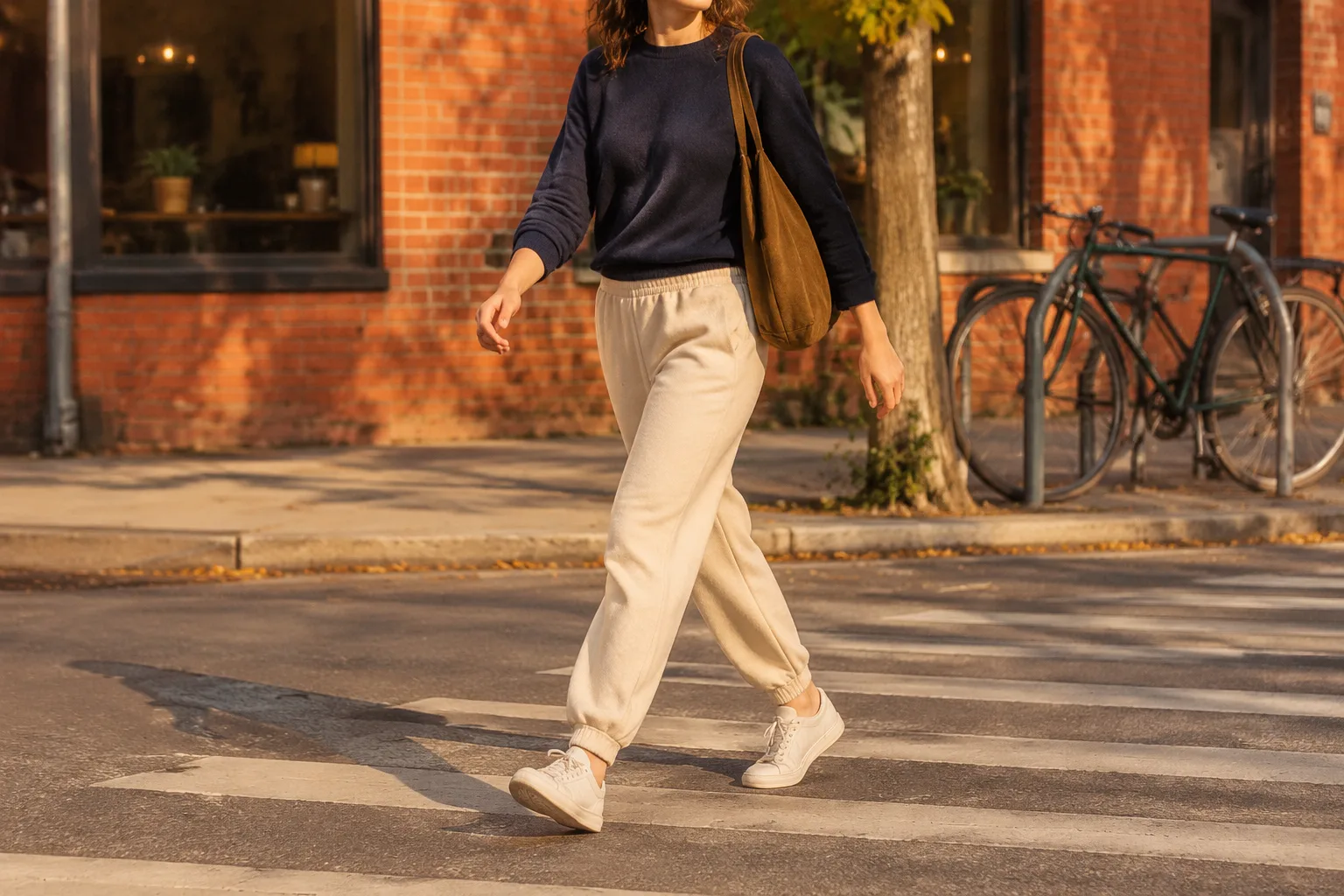
Elevated Sweatpants: Getting Casual Right on Purpose
Somewhere in the last decade, the sweatpant stopped being a confession. For most of the twentieth century it was gym wear, dorm wear, the thing worn to the corner store at 11 p.m. with the understanding that nobody important would see it. Then remote work loosened the dress code, fabric technology caught up, and a strange hybrid appeared: a pant with a drawstring waist that could survive a dinner reservation without apology. The category now has a name, elevated sweatpants, and a price range that would make a 1998 shopper choke on a pretzel. The whole trick of wearing them well comes down to a single discipline. Every element of the outfit has to look chosen.
That sounds abstract until it is not. A basic gray fleece and a $200 cashmere-blend jogger are the same silhouette, but they sit in the world differently. One reads as laundry day. The other reads as a decision. The gap between them is not just money. It is intent, and intent is visible in a way fabric alone never is.
What the Label Is Actually Selling
Walk into a mid-tier menswear shop and the sweatpant wall has become a taxonomy. There are the brushed-back cotton pairs, soft and slightly fuzzy, the kind that pill after thirty washes. There are the French terry pairs, smoother on the face and looped inside, which hold their shape through a season. Then there are the technical fabrics, nylon blends with four-way stretch and a matte finish, cut closer to a trouser and priced like one.
The technical end is where the marketing lives hardest. Brands describe these pants with language borrowed from performance outerwear: moisture-wicking, anti-odor, temperature-regulating. Some of that is real chemistry. Much of it is a story told to justify a price. A pair of drawstring pants at $180 is not selling fabric at that point. It is selling permission, the sense that the wearer has not given up.
The permission is the product. A person buying elevated sweatpants is buying a way to be comfortable in public without the small social tax that regular sweatpants carry. They want the softness and the elastic waist and the general absence of restriction, plus a silhouette that does not announce bedtime.
The Taper Is Doing Most of the Work
Silhouette matters more than fabric here, and the silhouette that reads as elevated is almost always tapered. A straight or wide sweatpant, cut full through the thigh and calf, looks like a costume of leisure. A tapered leg, roomy at the seat and narrowing to a clean ankle, looks like a trouser that happens to be soft. The taper pulls the whole line of the body forward, toward the shoe, and gives the eye somewhere to land.
The cuff is the second decision. A ribbed cuff at the ankle will always read slightly more athletic, closer to the track pant lineage. An open hem, finished clean and falling just above the shoe, is the more formal choice. Neither is wrong. A person wearing cuffed pairs with chunky sneakers is dressing in one register. A person in an open hem with a leather derby is dressing in another. The failure mode is mixing registers by accident, cuffing the pant and then wearing a dress shoe, which produces a strange half-costume.
The waistband deserves a word. Drawstrings that hang long and floppy look adolescent. Drawstrings tucked inside, or trimmed short, look deliberate. Elastic that has gone slack is fatal. A pair of sweatpants that will not stay up has already told the room everything it needs to know.
What Goes on Top Decides the Room
Elevated sweatpants can be worn to a coffee shop, a casual office, a weekend lunch, a flight. They cannot be worn everywhere, and the top half of the outfit is the signal. A hoodie over sweatpants, however expensive both pieces are, keeps the outfit in athleisure territory. A crewneck sweatshirt moves it slightly toward smart casual. A knit sweater, a button-down shirt, a structured jacket, or a fine-gauge polo pushes it into something that can hold a table at a restaurant without the host flinching.
The rule underneath is contrast. The softness of the pant needs a counterpart above it that has structure. A wool overshirt, a cotton poplin shirt with the collar left open, a merino crew, a cropped bomber: each of these gives the eye a crisp edge to hold onto. Pair the sweatpant with more softness and the whole look collapses into a nap.
Length matters on the top half too. A shirt or sweater that falls just below the waistband reads intentional. A jacket that hits at the hip bone keeps the proportions honest. Anything that hangs past the seat and covers the taper is wasting the one feature the pant has going for it.
The Shoe Question Has One Clear Answer
The shoe is where elevated sweatpants earn or lose the whole bet. A clean leather sneaker, low profile and unadorned, is the reliable answer. A minimalist runner in a single color works too. A chunky dad sneaker drags the outfit back toward 2018 and toward the gym. A dress shoe in polished leather creates the half-costume problem noted earlier. A loafer, worn without socks, is a genuine option for someone willing to commit to the bit, and it reads as one of the more interesting choices available.
Boots are the sleeper move. A suede chukka or a clean Chelsea in a tone that echoes the pant can carry the outfit through cold weather and look like a considered decision. The one thing to avoid is a shoe that looks like it has been through actual athletic use. Worn soles and scuffed toes undercut everything the pant is trying to do.
Color Is Where Most Attempts Fail
Heather gray is the default and the most dangerous. It photographs well and reads casual in a way that is hard to pull up. Charcoal, navy, black, olive, and a deep tobacco brown are more forgiving. A monochrome pairing, pant and top in the same tonal family, is the easiest route to looking put together. A contrast pairing, dark pant and light top or the reverse, needs more attention to fit and shoe to work.
Prints and logos should be treated with suspicion. A small tonal logo is fine. A large one, a collegiate letter, a graphic print, and the pant drifts back toward the campus gym. The whole appeal of elevated sweatpants is the absence of signaling. Adding a loud brand mark turns the outfit into an advertisement and the wearer into a billboard.
The Fit Check That Takes Ten Seconds
Before leaving the house in a pair, a wearer can run a quick mental checklist. Does the waist sit where a trouser waist sits, or has it slid down to the hip? Is there fabric pooling at the ankle, or does the hem break cleanly? Does the top half have at least one structured element? Do the shoes look like they were chosen rather than grabbed? Any single no is fixable. Two noes mean the outfit is not ready.
The checklist matters because the sweatpant is unforgiving in a way a jean is not. Denim holds its shape and forgives a rushed outfit. A soft pant shows every wrinkle and every sag. The margin for error is smaller, which is exactly why the payoff is larger when the outfit is right.
Why This Look Keeps Working
The deeper reason elevated sweatpants have stuck around, past the remote-work window that created them, is that they solve a real problem. A lot of modern life happens in rooms with no dress code and no clear expectation. The school pickup, the Saturday lunch, the flight, the coworking space, the dinner that is not quite casual and not quite formal. A person needs clothing that can move across those rooms without changing, and the elevated sweatpant does that better than most alternatives.
Jeans are stiffer and less forgiving on a long day. Chinos read a little too office. Joggers read a little too gym. The elevated sweatpant sits in the middle, and when the outfit around it is built with care, it reads as a person who has made a decision about how to spend the day. That is the whole game. The pant is casual by design. The outfit makes it intentional.
A pair in charcoal French terry, tapered to a clean ankle, worn with a cream merino crew, a dark suede chukka, and a wool overshirt left open. That outfit will walk into a restaurant at 7 p.m. on a Thursday and get seated without a second look. The same pant with a hoodie and a pair of running shoes will get a different table, if it gets one at all. Same pant. Different decision. The sweatpant was never the problem. The rest of the outfit was.