

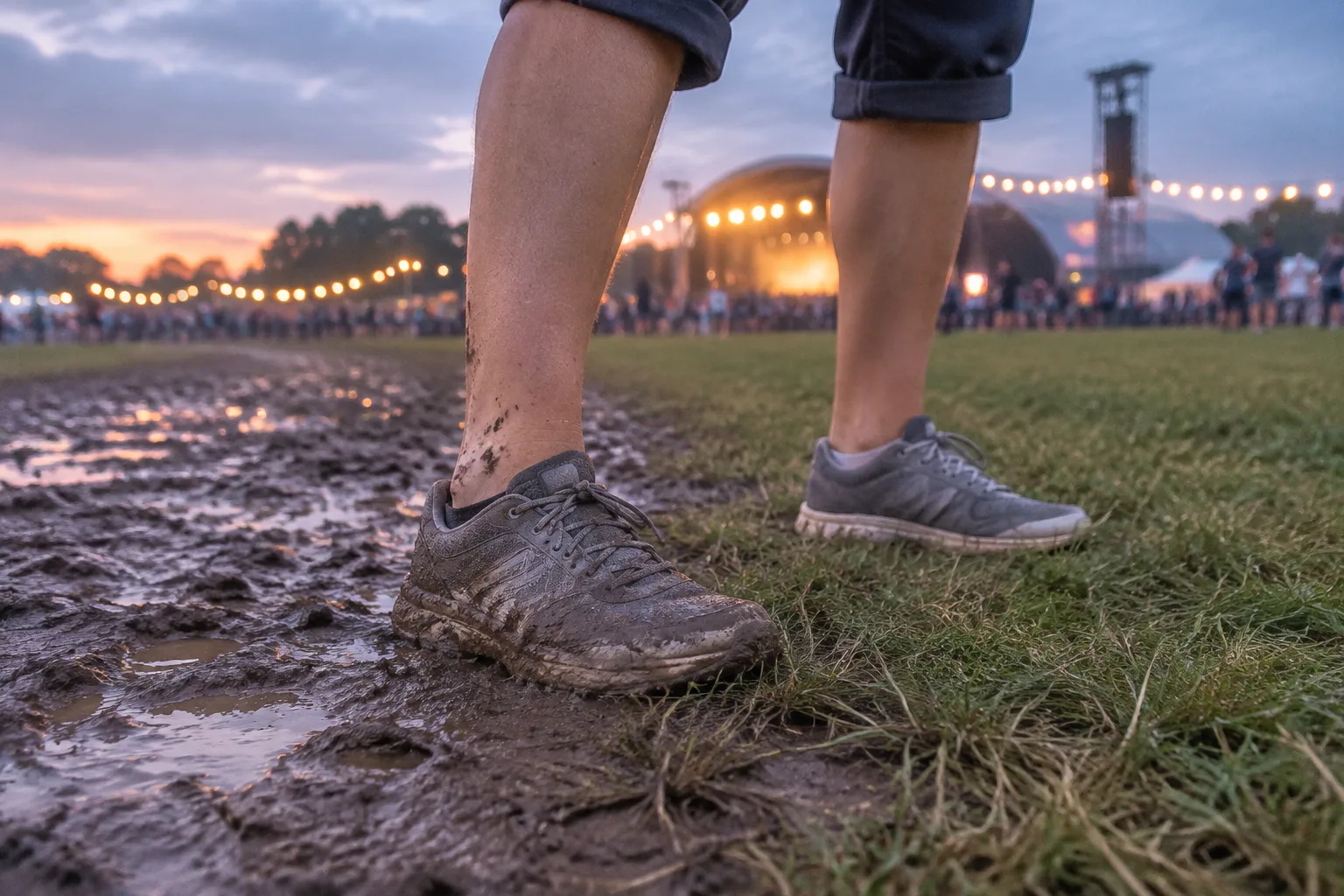
Festival Footwear: Sneakers That Hold Up and Look Sharp
Somewhere between the first outdoor festival of the season and the third day of a rain-soaked weekend, the question of footwear stops being a styling decision and becomes a practical one. Grass turns to mud. Gravel paths bite through thin soles. Standing for six hours in front of a stage rewards a shoe that flexes and forgives, and punishes anything with a stiff leather upper or a heel that sinks into soft ground. The festival sneaker has to solve two problems at once: survive the terrain and still look deliberate when the sun comes out and the camera comes up.
The fashion industry has spent the last several years pushing technical trail runners and chunky retro silhouettes as the answer to this exact problem. Most of them work. A few of them work spectacularly. But the category also hides a trap: a lot of shoes marketed as festival-ready are either too precious to get dirty or too flimsy to survive the second day. Narrowing the field takes knowing what the ground actually asks of a shoe.
The Ground Decides More Than the Outfit Does
Festival terrain is rarely uniform. A field that looks flat from the entrance gate can turn into a swamp by the main stage and a dry, rutted track near the food stalls. The shoe that handles all three has a lugged outsole with enough depth to grip wet grass, a midsole thick enough to cushion the walk between stages, and an upper that drains rather than holds water.
Trail running shoes solve most of this by design. Their tread patterns were built for mud and loose dirt, and their uppers tend toward mesh and synthetic overlays rather than suede. The tradeoff is visual: some trail runners look like they belong on a mountain, not on a main stage. The ones that cross over well tend to keep their lugs modest and their colorways restrained, so they read as intentional rather than borrowed from a hiking closet.
Mesh and Leather: What Survives Three Days of Dust
An upper's material matters more than most buyers expect, because festival wear is a stress test in slow motion. Dust works its way into seams. Rain softens leather and stiffens cheap synthetics. Canvas absorbs moisture and stays damp for hours. The materials that come through it cleanest are engineered mesh and coated nylon, both of which shed water and dry quickly.
Leather can work in a festival context, but only the right kind. Full-grain leather on a low-profile sneaker looks sharp and holds its shape, yet it scuffs visibly and takes a full day to dry if soaked. For a weekend with uncertain weather, mesh is the safer bet, and modern mesh no longer looks like a gym shoe. Woven panels and tonal colorways have made it presentable enough for a denim jacket and a linen shirt.
The white sneaker deserves a warning. It photographs beautifully on day one and looks like a mistake by day two. A festival is not the place for a pristine leather low-top. If a light color is the goal, a cream or off-white mesh runner wears the dirt better and cleans up with a brush and a damp cloth.
The Case for Trail Runners in Earth Tones
The trail runner has become the default festival shoe for good reason, and the earth-tone versions are the ones worth buying. Olive, clay, sand, and charcoal hide mud and dust in a way that neon performance colorways cannot. A muted trail shoe also pairs more easily with the rest of a festival wardrobe, which tends toward denim, canvas, and faded cotton.
The practical details are what separate a good trail runner from a bad one for this use. A rock plate under the forefoot protects against gravel and roots. A gusseted tongue keeps debris out. A heel counter that holds the foot steady matters more on uneven ground than on pavement. These features were designed for runners, but they translate directly to a person standing and walking for eight hours.
The counterpoint is that some trail runners are too aggressive. Deep, sharp lugs grip mud well but feel clumsy on a paved path and can track dirt into a tent. A moderate lug depth, in the 4 to 5 mm range, hits the balance. The shoe grips wet grass without turning the walk back to the car into a waddle.
Retro Basketball and Skate Silhouettes Hold Their Own
Not every festival happens on a farm. City festivals, warehouse parties, and urban street fairs put a premium on a shoe that looks sharp and handles concrete and pavement. Here the retro basketball silhouette and the skate shoe come into their own. A suede or leather skate shoe with a vulcanized sole has a flat, stable platform, a clean profile, and a durability that suits a venue with stairs and curbs.
The weakness is cushioning. Vulcanized soles are thin, and a full day of standing on concrete will make that felt by evening. An insole swap fixes most of it. A skate shoe with a decent aftermarket insole becomes a credible all-day option, and the classic colorways (black, white, navy, a muted red) hold up against almost any outfit.
Retro basketball shoes split the difference between cushioning and style. The chunky midsole that made them heavy on a court is exactly what makes them comfortable for standing. Suede versions in muted tones photograph well and wear in rather than out. They are heavier than a mesh runner, though, and the weight tells after several hours of walking. A person who expects to cover a lot of ground should weigh that honestly.
Waterproofing Is a Trap More Often Than a Feature
It seems logical to buy a waterproof sneaker for a festival. The reality runs the other way. A waterproof membrane keeps water out, but it also keeps moisture in. On a warm day, a sealed shoe becomes a humid chamber, and the foot inside it sweats and softens. Once water gets in over the collar, a waterproof shoe holds that water and takes far longer to dry than a mesh shoe that drains freely.
For festivals with a high chance of rain, the better answer is a quick-drying shoe plus a spare pair of socks in a plastic bag. A mesh upper that drains and dries will be comfortable again within an hour. A waterproof one may still be damp the next morning. Waterproofing earns its place on a cold-weather trail, not on a summer field.
Break-In Time and the Sock Question
No sneaker should make its festival debut on the day of arrival. A new shoe, even a comfortable one, needs a few miles of walking before it settles. Seams that feel fine in a shop can rub after three hours, and a midsole that feels cushioned in a store can reveal its limits on a long walk. Two or three days of ordinary wear before the event prevents most blisters.
Socks do more work than they get credit for. A merino blend wicks moisture and resists odor across a long day. A cotton sock absorbs sweat and stays wet, which is the setup for blisters. The shoe and the sock are a single system, and a good sneaker paired with a bad sock will still produce sore feet by the evening.
Lacing also matters and gets overlooked. A heel-lock lacing pattern, where the laces thread back through the top eyelets to pull the heel snug, stops the foot from sliding forward on descents and reduces toe pressure. It takes a minute to learn and changes how a shoe feels over a long day.
Cleaning a Festival Sneaker Without Ruining It
Most festival sneakers come home dusty and need less cleaning than expected. A dry brush removes loose dirt. A damp cloth with a little dish soap handles most stains on mesh and synthetic uppers. The mistake is to submerge the shoe or put it in a washing machine, which can break down adhesives and warp the midsole.
Air drying away from direct heat is the rule. A shoe stuffed with newspaper and left in a shaded, ventilated spot dries evenly and keeps its shape. Setting it on a radiator or in direct sun can crack the upper and shrink the fit. Suede needs a brush and a suede eraser rather than water, and leather wants a conditioner after it dries.
What Actually Belongs in the Bag
A practical festival kit pairs one pair of mesh or trail sneakers for the muddy, walking-heavy days with one pair of skate or retro sneakers for the indoor and urban stretches. A spare insole and a few pairs of merino socks take up little space and extend the life of both. A small brush and a cloth handle cleanup at the end of each day.
The sneaker that holds up and looks sharp is rarely the most expensive one or the most hyped. It tends to be the one with a lugged outsole, a quick-drying upper, a muted colorway, and a fit that was broken in before the gates opened. That combination survives the mud, the dust, and the long walk back to the car, and still looks like a choice rather than a compromise when the photos surface the following week.