

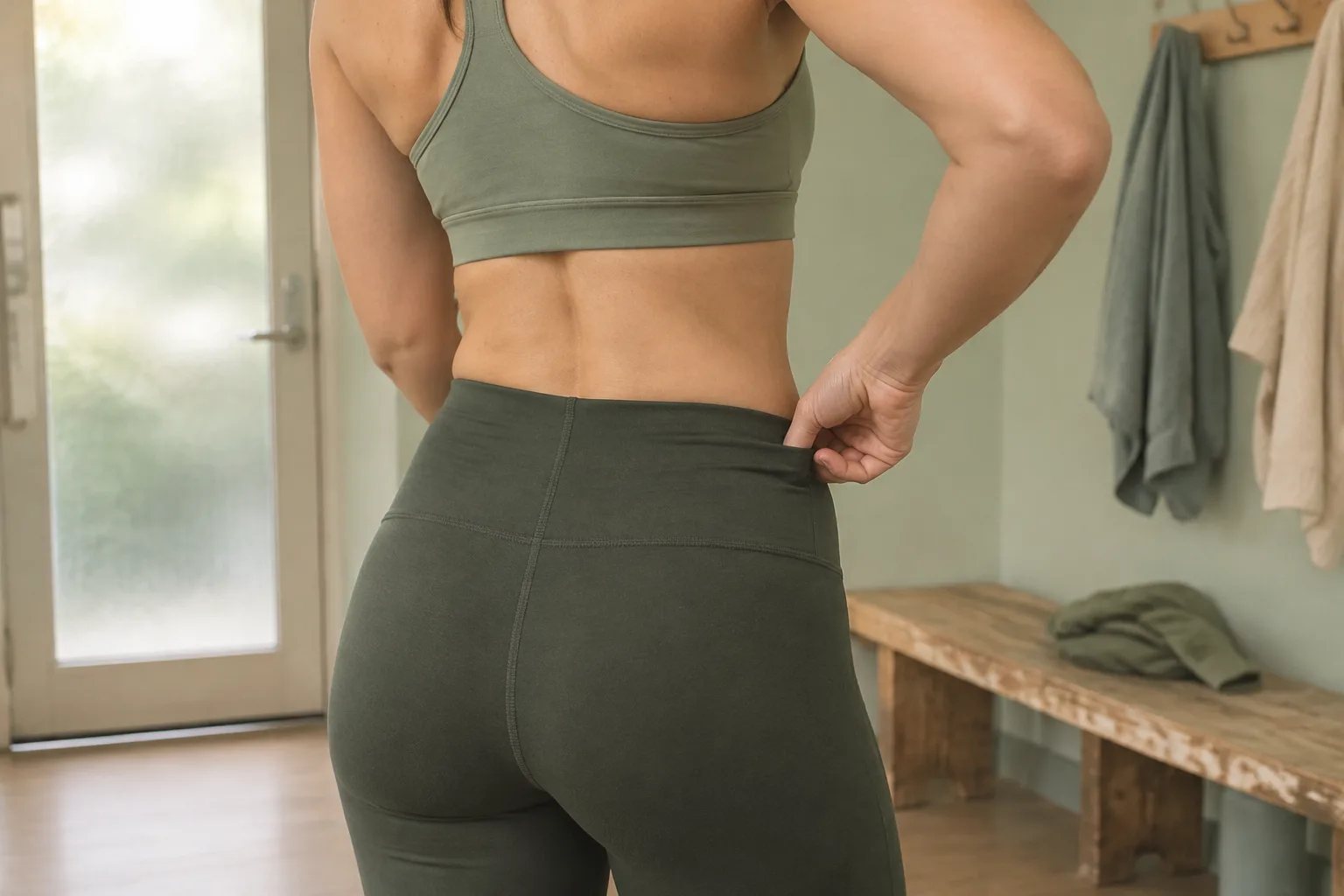
Fit First: Athleisure Adjustments That Change Everything
The waistband on a pair of athletic leggings is usually two inches of elastic knit, and it decides the entire day. Too low and the top edge digs a line into the stomach every time the body folds forward. Too high and it rides up under the ribs during a walk. The difference between those two failures is often a quarter inch of seam placement, a change no marketing photo will ever show. That small adjustment, made in the right direction, is what separates a pair of pants that gets worn three times a week from one that lives at the bottom of a drawer.
Athleisure has become the default wardrobe for errands, school runs, flights, and long hours at a desk, and the fit decisions that matter most in that life are not the ones the industry advertises. Nobody needs a stronger compression panel for sitting in a car. They need a hem that does not saw at the ankle and a shoulder seam that stays put under a tote bag strap. The adjustments that change everything are small, structural, and almost invisible.
The Rise Is a Measurement Before It Is a Style
Low-rise, mid-rise, high-rise: the labels sound like taste, but they describe a literal number, the distance from the crotch seam to the top of the waistband. A mid-rise pair sits near the navel on one body and well below it on another, because torso length varies by several inches between two people of the same height. This is why a pair of joggers that fits a friend perfectly can feel unwearable on someone else.
The practical move is to measure the rise of a pair that already works and treat that number as a filter. Most brands list it, and when they do not, the number can be estimated from the product photo by comparing the waistband to the crotch seam. A rise within half an inch of the familiar number will behave. Anything more than an inch off, in either direction, will pull, bunch, or slide all day, no matter how good the fabric feels in the fitting room.
Inseam Changes the Line of the Whole Outfit
An athletic pant that puddles at the shoe reads as sloppy even when the rest of the outfit is sharp. A pant that stops a half inch above the ankle bone reads as intentional, and it makes the shoe visible, which matters when the shoe is the only structured object in the look. The 7/8 length that many brands sell is not a fashion statement. It is a 25 to 27 inch inseam, and it flatters most heights because it ends at the narrowest part of the lower leg.
For anyone taller than about 5 foot 9, that length becomes a capri by accident, and the fix is to buy the tall version or look for a full-length pair with a finished hem that can be taken up a couple of inches by a tailor. Hemming knit fabric costs little, and it turns a pair that was almost right into the pair that gets worn constantly. A one-inch hem adjustment on a wide-leg track pant has more visual effect than any logo or colorway.
Shoulder Seams and the Sleeve Length Nobody Checks
On a hoodie or a crewneck, the shoulder seam should land at the outer edge of the shoulder bone, not an inch past it and not two inches inside it. A dropped shoulder, where the seam falls down the upper arm, looks relaxed and deliberate on a boxy fit. A seam that sits too far out on a fitted sweatshirt just looks like the wrong size. The distinction is easy to feel: raise one arm overhead. If the whole garment lifts with it and tugs across the chest, the shoulder is misplaced.
Sleeve length gets less attention and causes more daily friction. A sleeve that ends exactly at the wrist bone catches on everything, from a keyboard to a car door. A sleeve that stops an inch above it, with a ribbed cuff that hugs the forearm, stays out of the way and keeps the hand free. The difference is most obvious in a zip-up layer worn over a tee, where a too-long sleeve bunches at the wrist and makes the whole arm look shorter than it is.
Fabric Weight Does the Work That Fit Cannot
A legging made from very thin knit shows every seam line and every change in the body underneath, which is fine for a gym mirror and less fine for a grocery store. A slightly heavier knit, often described as brushed or double-layered, holds its shape through a full day and keeps the silhouette smooth. The weight is usually given in grams per square meter, and a range around 220 to 260 tends to be the sweet spot for everyday wear: substantial enough to be opaque, light enough to move in.
Weight also determines how a garment drapes. A heavy cotton sweatshirt falls in a straight line from the shoulder and skims the body. A thin one clings at the stomach and bunches at the waist. When a sweatshirt looks awkward in a mirror, the problem is often the fabric weight rather than the size, and going up a size in a thin fabric only makes it look bigger and softer in the wrong places.
The Leg Opening and the Shoe Beneath It
A jogger with an elastic cuff narrows the ankle and makes a sneaker look larger by contrast. A straight-leg track pant with an open hem lets the shoe sit naturally under the fabric, and the effect is longer and cleaner. Neither is better in the abstract, but they suit different shoes. A chunky running shoe pairs well with a wide, open hem that covers the top of the shoe. A slim low-profile sneaker pairs better with a cuffed jogger that shows the whole shoe.
The mistake is buying one pant and expecting it to work with every shoe in the closet. The hem and the shoe are a single visual unit, and adjusting one without thinking about the other is why so many outfits look almost right. A simple test before leaving the house: look down at the ankle. If the fabric and the shoe fight for the same space, one of them has to change.
Pockets That Hold a Phone Without Pulling the Waistband
A side pocket sewn into the seam of a legging will sag the moment a phone goes in, and the sag pulls the entire waistband down on one side. The fix is a pocket set into a wide, flat waistband with an inner lining, which distributes the weight across the front of the body instead of one seam. This is a construction detail, and it is visible in a product photo if the waistband is shown from the inside. A wide band with a hidden pocket layer is worth more than any amount of stretch in the fabric.
The same logic applies to a hoodie pocket. A kangaroo pocket stitched flat against the body holds a phone close and keeps it from swinging. A pocket with too much depth lets the phone bounce against the thigh with every step, which is a small annoyance that turns into a reason not to wear the garment on a walk.
Layering Lengths That Keep Proportions Intact
A cropped hoodie over a high-rise legging creates a clean break at the waist and makes the legs look longer. The same cropped hoodie over a low-rise pair leaves a strip of skin and a horizontal line in the middle of the torso, which shortens the whole frame. The layers have to agree on where the waist is. When they do, the outfit reads as one piece. When they do not, it reads as two halves that happened to meet.
A longline tee under a shorter jacket is the reverse case. The tee hem should fall below the jacket hem by a couple of inches so the layers look deliberate. If the two hems land at nearly the same point, the eye sees a single thick band at the hip and the body looks wider than it is. Moving one hem by two inches fixes it, and that adjustment costs nothing.
A Sizing Habit That Costs More Than It Saves
Many people buy athleisure one size down, on the theory that a tighter fit looks more athletic. In practice, a size down in a compression garment restricts movement and creates pressure lines at the waist and thighs that show through the fabric. In a loose garment, a size down pulls across the back and shoulders and makes the fabric strain at the seams. The right size in a well-made piece looks better than a size down in anything.
The exception is a garment designed to be oversized, where the intended fit is already built into the pattern. A boxy sweatshirt cut for a relaxed look should be bought in the stated size, not sized up further, because the drop shoulder and wide body are already accounted for. Reading the fit description before choosing a size prevents the most common and most expensive mistake in the category: buying the same size across every brand and assuming it will behave the same way. It will not. The brands that fit well are the ones whose size charts list actual body measurements, and those charts are worth the thirty seconds it takes to compare them against a measuring tape.
Athleisure that fits well is not a matter of finding the perfect brand. It is a matter of knowing a handful of numbers, the rise, the inseam, the shoulder width, and the fabric weight, and refusing to buy anything that misses them by more than a small margin. The pieces that survive years of wear are rarely the most exciting ones on the rack. They are the ones with a waistband that stays put, a hem that ends in the right place, and a shoulder that lets the arm move without dragging the whole garment along for the ride.