

Leggings That Hold Their Own Off the Mat
Yoga leggings have spent two decades being optimized for a room with a rubber floor, a mirror, and a thermostat set to 72 degrees. The result is a garment that photographs beautifully in a lunge and betrays its wearer at the grocery store, on a bicycle, in a cold wind, or at a desk where the edge of a chair has been slowly sanding away the seat's integrity. The athletic-wear industry solved a problem it invented and then sold the solution back as a lifestyle. What gets lost in that transaction is the plain question of whether a pair of leggings can survive a Tuesday.
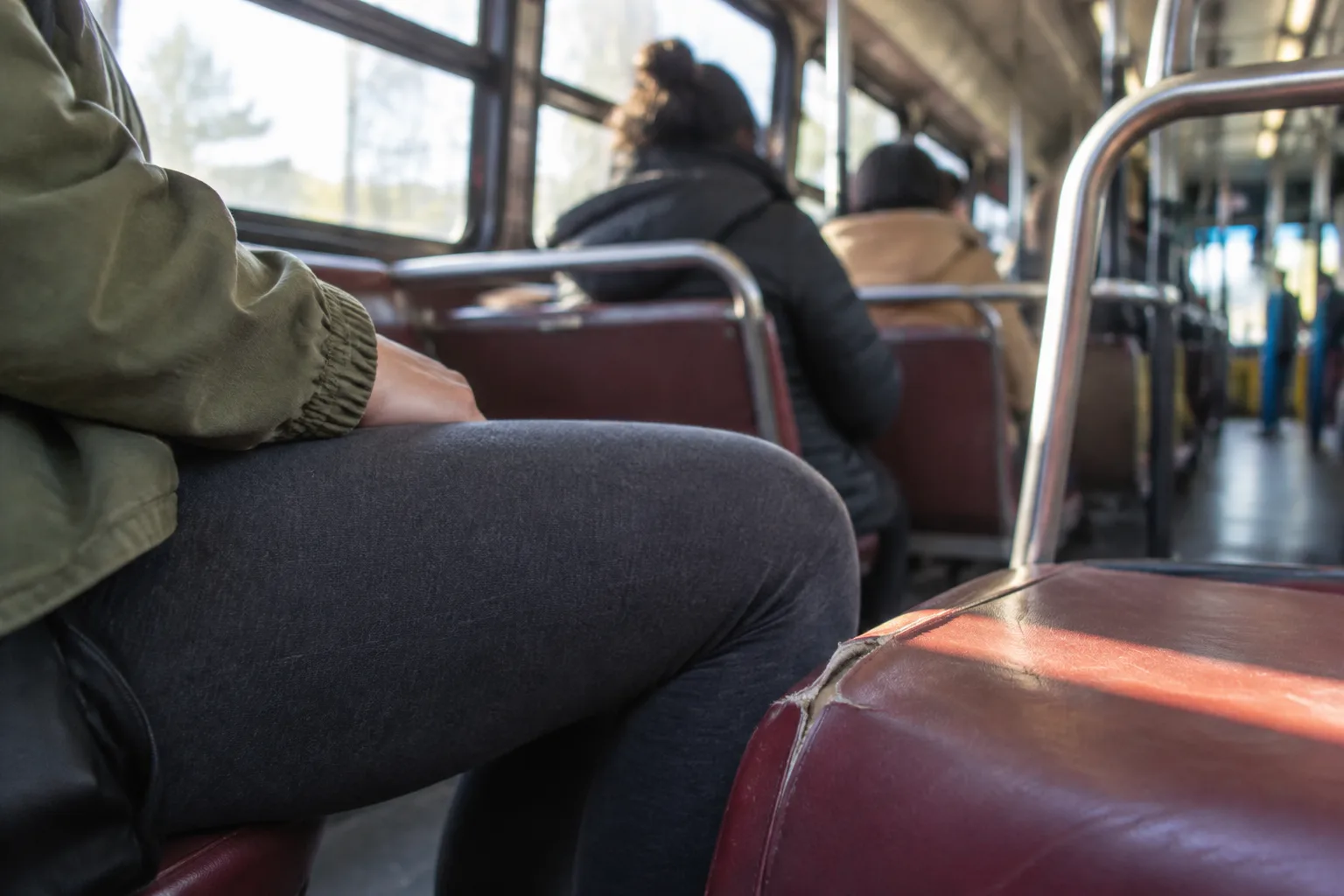
Off the mat is a specific place. It is a bus seat with a torn vinyl seam. It is the walk from a parked car to a building entrance in January. It is a long flight, a school pickup, a full day of errands that ends with an armful of groceries and a grip that has to hold. The mat is forgiving. The world is not.
Judging leggings by how they feel in a forward fold is like judging a raincoat by how it looks on a hanger. The real test comes later, under conditions nobody photographed.
The waistband is where most pairs fail
The single most common failure point has nothing to do with fabric technology. It is a rolling waistband. A band that folds over on itself during a seated hour converts a piece of clothing into a small, persistent nuisance that a person notices every few minutes. The cause is usually a narrow elastic sewn into a wide panel, or a band with no internal structure at all.
A waistband that stays put tends to be wider, often three inches or more, and built with a bonded or double-layer construction rather than a single strip of elastic. This matters more than any compression claim printed on the tag. Compression is a marketing word with no standard definition. A band that does not migrate is a measurable thing.
There is a trade-off here worth naming. Wide, structured bands feel firmer against the midsection and can be less comfortable for sitting for long stretches. Narrow, soft bands sit lower and disappear under clothing but tend to roll. The right answer depends on which failure a person finds more tolerable, and it is rarely the same answer twice.
Fabric weight separates a legging from a layer
Mat leggings skew light. That is a feature when the body is warm and a liability everywhere else. A thin, high-stretch knit shows every seam and shadow, clings to the skin in humidity, and offers almost nothing against a cold seat or a breeze. The fabric that holds its own off the mat tends to have more mass.
Look at the hand-feel: a legging with real body feels dense and slightly cool, not slippery and sheer. Hold it to a light. If a hand behind the fabric is clearly visible, so is everything else. Weight is usually expressed in grams per square meter, and while the number is not printed on most retail tags, the density is obvious in the fingers.
Heavier knits drape rather than cling. They hold a straight line down the leg instead of tracing every contour, which is why they read as trousers in a way lighter pairs never do. The cost is stretch. A denser fabric moves less, which some wearers find restrictive in a deep hip opener and others find reassuring in a crowded train car.
Pilling is the slow verdict
Most leggings look acceptable in the first month. The interesting question is what they look like after twenty washes and a season of friction against car seats, bag straps, and the backs of chairs. Pilling is where cheap knit reveals itself, and it is nearly impossible to reverse once it starts.
The culprit is usually a high proportion of short-staple fibers blended into the knit to soften it and lower the cost. Those short fibers work loose under abrasion and ball up on the surface. A fabric with longer, smoother fibers resists this. Brushed interior surfaces, common in cold-weather leggings, are especially prone because the brushing creates loose fiber ends before the garment is even worn.
There is no reliable way to test this in a fitting room. The best available signal is the fiber content and the reputation of the mill, and even that is imperfect. A person can reasonably expect a pair to pill somewhere between the tenth and thirtieth wash if the knit is built from soft, short fibers. If a pair has survived a full season without fuzz at the inner thigh, it is probably built to last.
Opacity under real light, not fitting-room light
Fitting rooms are lit to flatter. Bright, angled, and usually positioned to cast soft shadows, they hide the one property that matters most outside the studio. The honest test is daylight. A pair that looks opaque in a mirrored cubicle can turn translucent the moment it meets a window.
Squatting in front of a bright window is the crude, effective check. So is holding the fabric up against a lamp. Colors matter too: black and dark navy hide a great deal, while lighter tones and heathered knits reveal structure that darker solids conceal. A pale gray legging is an unforgiving garment, and a brand that sells one had better have built it properly.
Opacity also drifts with wear. A knit stretches, and stretched fabric thins. The seat and knees of a legging will always be the first to go sheer, which is why a slightly heavier fabric is worth the extra warmth on a cool day.
Pockets change the category
A phone in a waistband is a phone that will eventually fall out or dig into the hip during a seated hour. A side pocket sized to hold a phone flat against the thigh turns leggings into something a person can leave the house in without carrying a bag. This is a small design decision with an outsized effect on daily use.
The pocket has to be positioned and reinforced properly. A shallow pocket that lets a phone slide toward the knee is worse than no pocket. A deep, flat pocket with a stitched top edge keeps the phone still against the leg and distributes its weight so the fabric does not sag. The best versions are almost invisible when empty, which is the mark of a well-considered pattern.
This is the feature that most clearly separates a legging built for a studio from one built for a life. Brands that market heavily to yoga studios tend to skip it. Brands that market to runners, travelers, or commuters tend to include it, and the difference in usefulness is immediate.
Seams that sit where they should
A seam in the wrong place becomes a pressure point over the course of a day. The most common offender is a center-front seam that runs straight up the middle, which can chafe during long periods of sitting or walking. Flatlock stitching, where the seam is joined without a raised ridge, is the standard for athletic wear and is worth checking by running a thumb along the inside of the garment.
Gussets, the extra panel sewn into the crotch, reduce stress on the fabric and improve durability. They are standard in well-made leggings and absent from cheaper ones, where the fabric is simply joined at a single seam that takes all the strain. A gusset is not glamorous, but it is one of the clearest signs that a pattern was drafted with the body's movement in mind.
Seam placement also affects how the legging reads under clothing. A flat, well-placed seam disappears under a tunic or a long sweater. A bulky one shows through, which limits how the pair can be styled.
The case for a slightly less stretchy knit
High-stretch knits, often marketed with numbers like four-way stretch, feel wonderful against the skin and move with every pose. They also tend to recover poorly. A fabric that stretches a great deal and springs back weakly develops sag at the knees and seat over months of wear, and once it sags it does not come back.
A knit with moderate stretch and good recovery holds its shape longer. Recovery is the property that matters: how completely the fabric returns to its original dimensions after being stretched. It is hard to test in a store, but a simple check helps. Stretch a section of the leg gently and release it. A fabric that snaps back cleanly will generally hold up better than one that lingers in the stretched state.
The modest amount of stiffness that comes with better recovery is the price of longevity. It is a trade most wearers make without noticing, because the difference shows up months later, in a pair that still fits the way it did on the first day.
What a pair of leggings owes the day
The honest standard for leggings worn off the mat is modest. They should stay up without adjustment. They should not turn transparent in daylight. They should not pill into fuzz after a season. They should carry a phone and a set of keys without sagging. And they should look like clothing rather than athletic equipment when paired with a coat and a pair of boots.
None of these are glamorous claims, and none of them photograph well. They are the qualities a person notices only when they are missing, usually at the worst possible moment: on a crowded platform, in a cold car, halfway through a long afternoon of errands. The mat is a controlled environment. The rest of the day is the real test, and the leggings worth keeping are the ones that pass it quietly, without being asked.