
Small-Space Sneaker Storage That Keeps Pairs Pristine
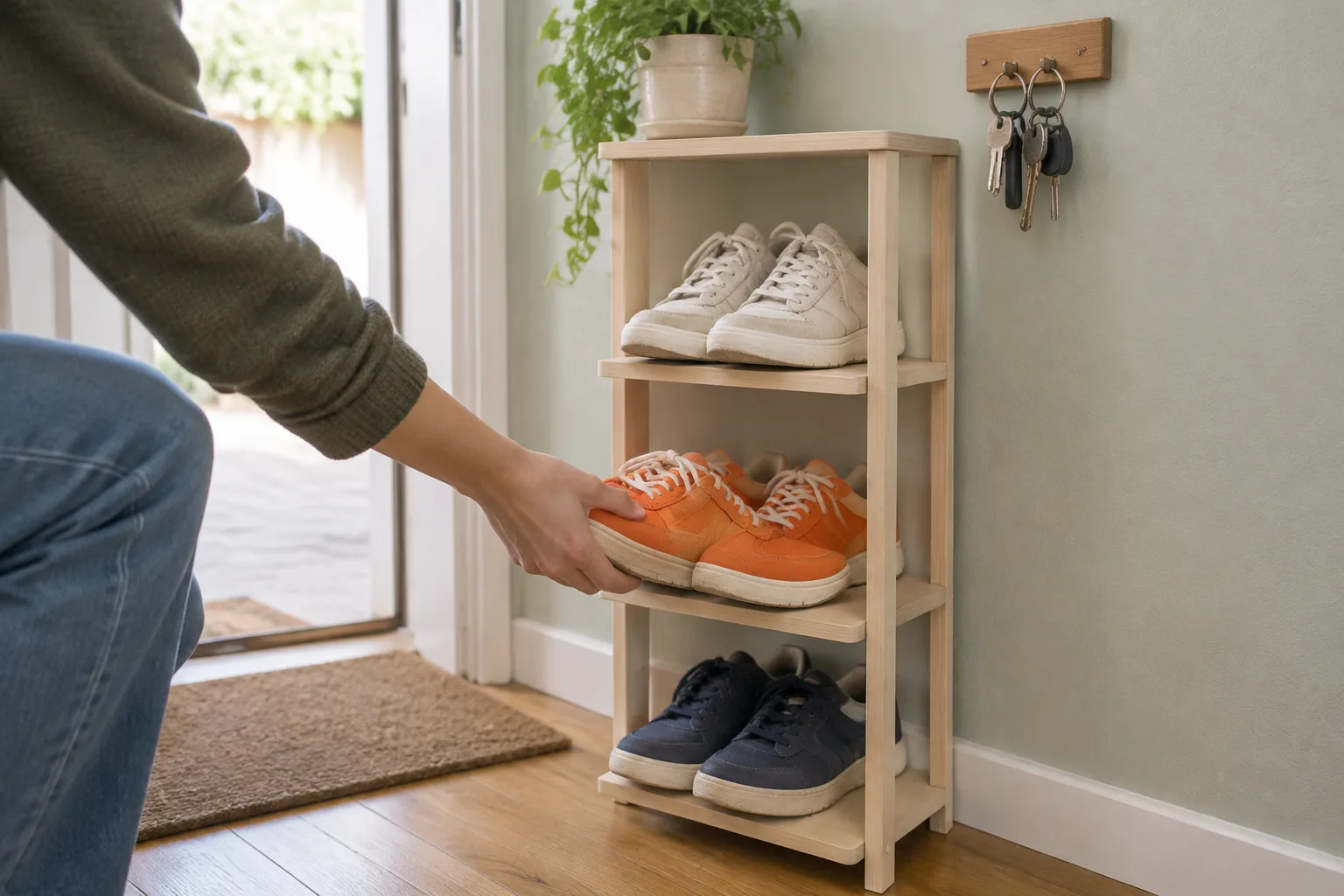
The shoe rack by the front door holds four pairs, and the fourth pair is always the one that suffers. It sits closest to the floor, catches the drip from a wet umbrella, and collects the grit that falls off everything above it. Sneaker storage in a small apartment is a problem of physics before it is a problem of taste: limited cubic footage, a fixed number of pairs, and a daily ritual of taking shoes off and putting them back that wears down any system that asks for too much effort.
Most storage advice for sneakers assumes a closet the size of a small bedroom. The reality for a lot of people is a hallway, a shelf above a coat hook, or the dead space under a bed. The pairs still need to stay clean, keep their shape, and not turn the entryway into a pile. That is the constraint worth solving, and it is solvable with a few specific moves.
Why sneakers degrade in storage, not in wear
A pair worn twice a week and stored badly will age faster than a pair worn daily and stored well. The damage happens quietly. Midsole foam compresses under the weight of whatever sits on top of it. Uppers crease where a shoe is jammed against a wall or another shoe. Dust settles into mesh and knit, and in a humid apartment that dust turns into something closer to grit that bonds to the fibers.
Leather and suede have their own failure modes. Leather cracks along flex points when it dries out and stays folded for months. Suede picks up indentation from anything resting against the nap. Canvas yellows at the glue line if it sits in direct sun near a window. None of these are dramatic. They accumulate, and by the time a pair looks tired, the cause was a shelf, not a sidewalk.
The fix is not elaborate. It is about giving each pair a defined, supported position where nothing presses on it and air can move around it.
The shelf that wastes the least vertical space
The default shoe rack, the kind with angled wire tiers, is designed for visibility rather than density. It holds maybe eight pairs in the footprint of a small bookcase and leaves a hand's width of dead air between tiers. A better use of the same wall is a straight shelf at a height that clears the tallest boot in the collection, with the next shelf spaced tightly above it.
Adjustable wall standards and brackets cost little and let the shelves follow the actual height of the shoes rather than a manufacturer's guess. A low-profile sneaker might need three inches of clearance; a high-top needs eight. Setting shelves to the tallest shoe in each column, not the average, recovers a surprising amount of room.
Depth matters as much as height. A shelf 12 inches deep holds most sneakers with the toe pointing out. Anything deeper invites a second row, and a second row means the back pair never gets worn because reaching it requires moving the front pair. In a small space, one row deep and honest about capacity beats two rows that hide half the collection.
Clear boxes versus open shelves
The drop-front clear plastic box has become the standard for serious collectors, and for good reason. It keeps dust off, stacks predictably, and lets a person see what is inside without opening anything. The catch is that a wall of identical boxes reads as inventory, not as a room. In a studio apartment where the storage is visible from the sofa, that aesthetic is a real cost.
Open shelves with a low lip work better in shared living space. They let the shoes be the visual element, which is often the point of owning interesting sneakers. The tradeoff is dust, which is manageable with a quick wipe every couple of weeks and a rotation that keeps pairs from sitting untouched for months.
A hybrid works for mixed collections: clear boxes for the pairs that are rarely worn or are valuable enough to protect, open shelves for the daily rotation. The daily pairs get air and easy access; the stored pairs get protection. Splitting the collection this way also forces an honest cull of what actually gets worn.
Under-bed space and the dust problem
The space under a bed is the largest unused volume in most small apartments, and it is also the dustiest. A pair of sneakers stored there for a season will come out gray. Flat lidded bins solve the dust but trap moisture if the shoes go in damp, which is a genuine risk in humid climates or after a rainy commute.
The workable version is a shallow under-bed bin with a lid that does not seal airtight, plus a silicone desiccant pack tossed in. Shoes go in dry, never straight off a wet walk. The bin slides out on casters so the back pairs are reachable. This setup holds maybe six to eight pairs in a space that otherwise holds nothing, and it keeps them out of the entryway entirely.
One caution: under-bed storage is fine for seasonal pairs and poor for the daily rotation. Anything that needs to come out every morning belongs at standing height, not on hands and knees.
Shoe trees, stuffing, and shape retention
A sneaker with no internal support collapses at the heel and creases across the toe box. Cedar shoe trees, the kind with a spring-loaded heel, hold the shape and pull moisture out of the lining. They are the single most effective storage accessory for leather sneakers and cost less than most pairs of socks.
For knit and mesh runners, a full shoe tree can stretch the upper. Lightly crumpled acid-free tissue paper does the job without pressure. The point is to fill the void inside the shoe so the upper does not sag, and to do it with something that will not bleed ink or dye onto the lining.
Laces deserve a mention. A pair stored with laces tied tight pulls the tongue and upper out of shape over months. Loosening the laces before a pair goes into storage, and tucking them inside the shoe, keeps the throat from stretching and stops the laces from snagging on neighboring pairs.
Rotating pairs so nothing sits for a season
Storage damage is largely a function of time. A pair that sits untouched for six months in a dry closet will be stiffer and more creased than the same pair worn in a weekly rotation. The practical fix is to build rotation into the storage itself: the shelf holds the current week's pairs, and everything else lives in the less convenient boxes.
A simple rule that works: no pair stays in long-term storage for more than a season without coming out for a wear. That single wear re-oils leather, resets the foam, and reveals any damage before it sets. It also surfaces pairs that have been kept out of habit rather than affection, which makes the next cull easier.
The door-hanging option for tight entryways
In an apartment with no wall space near the door, an over-the-door shoe organizer is the least invasive option. The fabric pocket versions are cheap and hold a dozen pairs, but they sag and the pockets press against the uppers, which creases soft leather over time. A rigid wire or metal over-door rack holds shape better, though it marks the top of the door over the years.
The better version of this idea hangs on the back of a closet door rather than the entry door, keeping the daily pairs out of the hallway entirely. It costs a few inches of door clearance and solves the entryway clutter problem without any wall drilling.
What a small collection actually needs
The storage that keeps pairs pristine is not the most elaborate system. It is the one that gives each pair a supported position, keeps the daily rotation at hand height, protects the seasonal pairs from dust and moisture, and makes it easy to pull any pair out and put it back without a struggle.
For most small apartments that means one wall of adjustable shelves at the entry, a shallow lidded bin or two under the bed for the off-season, cedar trees in the leather pairs, tissue in the knits, and a rotation that brings every pair out at least once a season. The whole setup costs less than a single pair of the sneakers it protects, and it fits in a space that was previously just a wall.