
Sneaker Trends Worth Your Attention and the Ones to Skip
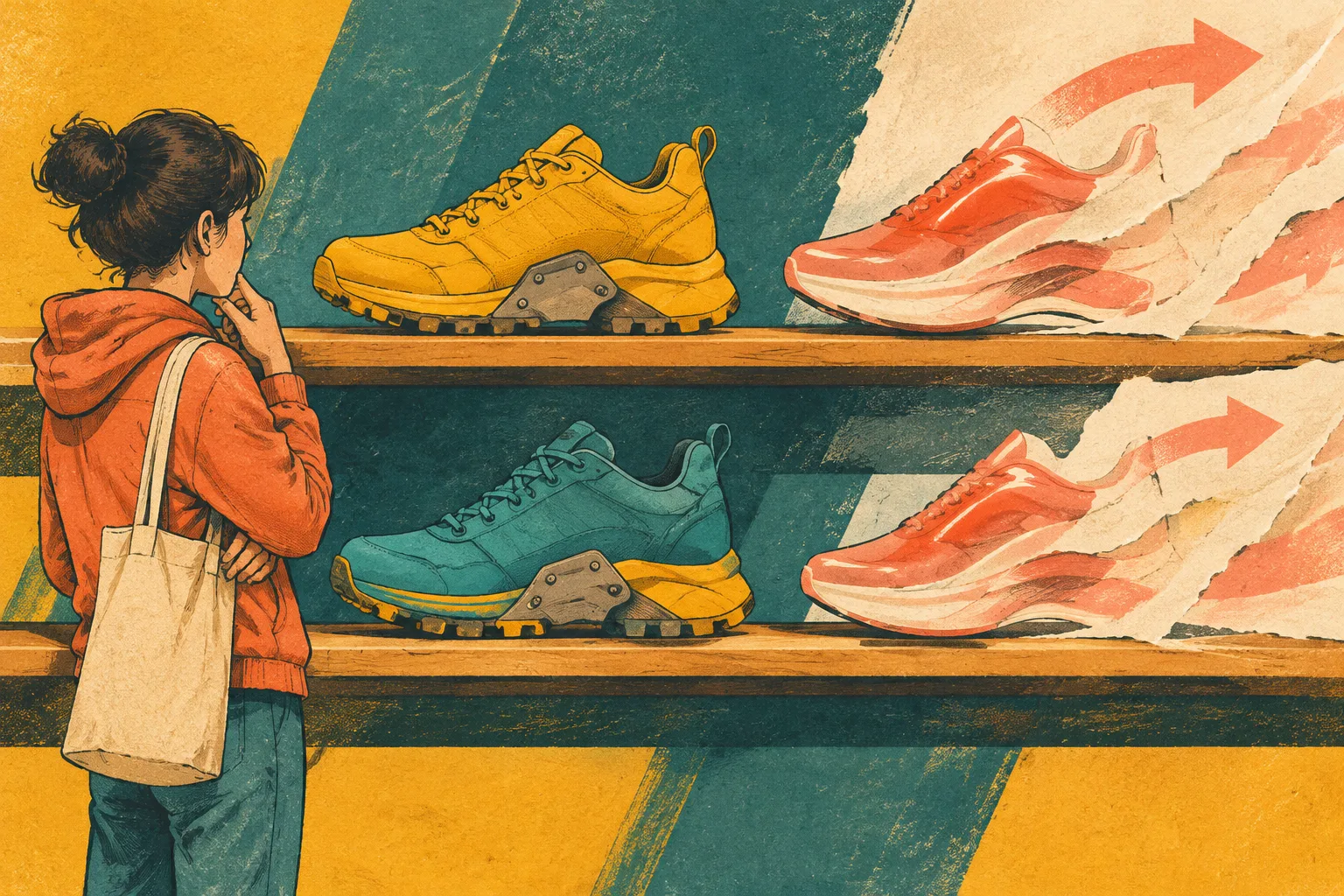
Five years ago the trail running shoe was a niche item sold in specialty stores to people who knew what a rock plate was. Now it sits on the same shelf as the lifestyle sneaker, often made by the same brand, sometimes sharing a sole unit. The category has blurred in ways that make shopping harder, not easier. A person looking for a pair of shoes to walk the dog in has to navigate carbon plates, supercritical foams, and collaborations with luxury houses. The trends below are the ones actually reshaping what shows up on shelves, separated from the ones that mostly reshape marketing decks.
The trail shoe as everyday footwear has real staying power
Walk through any city on a wet Tuesday and count the Salomons. The XT-6, with its quicklace system and mesh upper, went from hiking accessory to street uniform in about three years, and the reasons are practical. The shoe is light, it drains, it grips wet pavement better than most running shoes, and the aggressive outsole looks purposeful in a way that a plain white sneaker no longer does.
What makes this trend worth attention is that it solved a real problem. The technical trail shoe offers weather resistance and traction without the bulk of a boot. For anyone who commutes on foot or spends weekends outside, it earns its place. The trend has also pulled prices in both directions: entry models from brands like Merrell and Salomon sit under a hundred and fifty dollars, while the fashion collaborations climb past three hundred.
The skip signal here is saturation. Every brand now has a chunky trail-inspired silhouette, including ones with no history in trail running, and many of those are heavy, stiff, and built from the aesthetic rather than the function. A trail shoe from a company that has never made a trail shoe is a costume.
Carbon plates in daily trainers deserve skepticism
The racing shoe wars produced genuine engineering: a stiff plate embedded in a lightweight foam really does return energy and reduce fatigue over a marathon. That technology then migrated, as technologies do, into shoes sold to people who will never race. The result is a category of daily trainer with a plate, a high stack, and a price near two hundred dollars.
For most recreational runners, the plate adds stiffness that changes gait in ways the body did not ask for. The shoe wants to roll forward at a specific cadence. A person running three miles at a conversational pace gets none of the benefit and some of the instability. The high stack also makes the shoe tippy on corners and awkward on grass.
There is a place for these shoes: long-distance racing and fast tempo work. As an everyday purchase, they are overbuilt. The money is better spent on a comfortable daily trainer with a moderate stack and a foam that does not feel like packing material after two hundred miles.
The retro runner revival has one more good year in it
The trend of reviving eighties and nineties running shoes, suede and mesh and a lot of grey, has been running since around 2019. It survived because the shoes are genuinely comfortable for standing and walking, and because the silhouette reads as casual without trying. The New Balance 990 series and its many descendants remain the reference point: wide, stable, made in a factory that has been making them for decades.
The trend is nearing its end, though, and the tell is the number of colorways. When a single model appears in forty colorways across three retailers, the market is being flooded. Brands are also pushing the revival into increasingly obscure archive models, which means the good ones have already been done and the current releases are scraping the bottom of the catalogue.
A person who wants one pair of retro runners should buy now, from a brand with a long history of making that exact shoe, and then stop paying attention for five years. The next wave will look different, and the current wave will look dated sooner than expected.
Minimalist and barefoot shoes remain a niche with a real audience
The barefoot movement peaked around 2010, crashed when the research on injury rates turned out to be more complicated than the marketing suggested, and settled into a small, durable niche. That niche is worth attention for a specific kind of buyer: people who want a wide toe box and a flat, flexible sole for walking and lifting, not for running long distances on pavement.
Brands like Vivobarefoot and Xero make shoes that let the foot move, and the fit is dramatically different from a standard sneaker. The toe box is wide enough that toes can splay. The sole is thin enough that the ground is felt. For someone with foot pain from narrow shoes, the change can be significant, though the transition should be gradual and any persistent pain deserves a professional opinion rather than a shoe purchase.
The skip signal: any shoe marketed as barefoot that still has a narrow toe box or a thick cushion. Those are fashion items wearing the label. The whole point is the shape and the flexibility, and a shoe that compromises on either is not delivering the thing being sold.
Chunky dad shoes have peaked and the descent is visible
The exaggerated sole, the triple-stack midsole, the shoe that looks like it was designed by a committee of toddlers with a foam machine: that silhouette had a remarkable run. It made sense for a while. The proportions were a reaction against the slim, minimal sneaker, and the comfort was real for people who stand all day.
The descent is now visible in the discount racks. Models that retailed at a hundred and eighty dollars are sitting at seventy. The trend has moved through its lifecycle faster than most, partly because the silhouette is so distinctive that it dates instantly. A chunky shoe from three seasons ago looks like a chunky shoe from three seasons ago, and nothing ages a wardrobe faster.
There is no reason to buy a new one. A person who already owns a pair can keep wearing it, because comfort does not expire. A person shopping now should look at the slimmer retro runners instead, which have more longevity and pair with more outfits.
Gorpcore gave the outdoor brands a second life
The term gorpcore, coined to describe the wearing of outdoor gear as fashion, has been in circulation since around 2017. It persists because the underlying logic is sound: outdoor brands make durable, weatherproof, functional products, and those products happen to look good in a city. A waterproof shell and a pair of approach shoes are useful items regardless of whether the wearer ever summits anything.
The sneaker expression of this trend is the approach shoe and the hiking sneaker, which combine a sticky rubber outsole with a low-profile upper. Brands like Arc'teryx and Salomon have benefited enormously. The trend has also produced some genuinely good everyday shoes, including the Salomon RX line and various low-cut hiking models that work as walking shoes.
The skip signal is price inflation on items with no added function. A hundred and eighty dollar approach shoe is a reasonable purchase. A four hundred dollar version from a fashion label that licenses the name is not. The function is the point, and paying a premium for the logo while losing the function defeats the purpose.
The resale market has changed what gets made
One structural shift matters more than any single silhouette: the secondary market. Sneakers that resell for multiples of retail have taught brands to release in limited quantities, which creates artificial scarcity and drives hype. That cycle is now visible in the design itself. Brands make shoes that photograph well and look distinctive in a feed, because the first buyer is often a reseller rather than a wearer.
The consequence for a normal shopper is that the best-value shoes are often the ones that did not sell out, which means they are not the ones being marketed. A person can find excellent sneakers at deep discounts simply by ignoring the release calendar and looking at what is sitting on shelves. The shoe does not know it was unpopular.
This also means the trends worth attention are frequently the quieter ones: a well-made trail shoe, a comfortable retro runner, a wide-toe-box walking shoe. The loudest releases are optimized for the resale market, and the wearer is an afterthought.
What to actually buy this season
The useful purchase right now is a single pair of shoes that serves the actual week: walking to transit, standing at a counter, maybe a short hike on the weekend. A trail-inspired sneaker from a brand with real outdoor history fits that description. A retro runner with a wide fit and a durable sole fits it too. Either can be found for under a hundred and fifty dollars if the shopper avoids the collaboration drops.
The trends to skip are the ones that ask the buyer to pay for a story rather than a function: the plated daily trainer, the designer trail shoe, the chunky silhouette on its way out. Those shoes will be on the discount rack within a year, and the person who paid full price will feel the difference.
A final concrete note: check the return policy before buying any shoe online, because fit is the only spec that matters and it cannot be judged from a photo. A pair that fits well and costs ninety dollars will outperform a pair that costs three hundred and pinches at the toe. The trends are interesting. The fit is the purchase.