

Sporty Bags That Carry You Through the Day
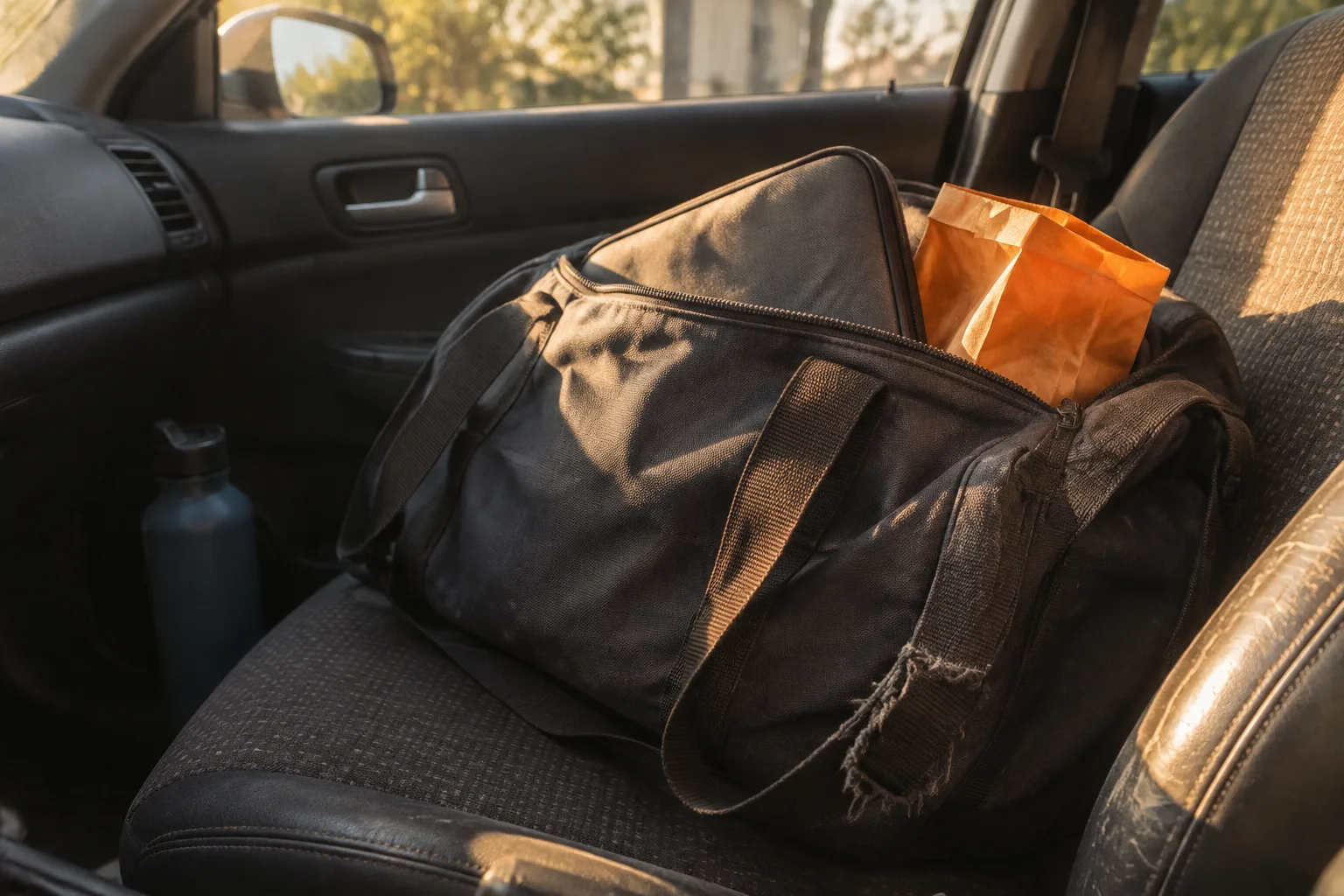
The gym bag in the passenger seat has become luggage. It started the morning holding a towel, a water bottle, and a change of shirt. By evening it holds all of that plus a laptop, a paper bag of groceries, a phone charger, and the day's accumulated mail. The zipper strains. The strap has begun to fray where it rubs against the seat bolster. Somewhere between the 6:40 spin class and the 7:15 commute home, a piece of equipment designed for one job quietly took on four.
Sporty bags, the kind sold in the running aisle and the tennis shop and the outdoor store, are having a moment that has nothing to do with sport. They are being carried to offices, on trains, through airports, into restaurants. This is a real shift in how people move through a day, and it deserves a real look at what these bags are actually good at and where they fall apart.
The gym bag's original job was narrow
A traditional duffel was built for a locker room. It needed to hold shoes, a towel, and a change of clothes, and it needed to be thrown in a corner without ceremony. The handles were short. The interior was one big cavity. The fabric was tough and cheap and ugly, and nobody minded, because nobody carried it anywhere that mattered.
That bag is still fine for its narrow purpose. What has changed is the purpose. A growing share of people go from a workout straight to work, or from work straight to a class, and they want one bag that does both without looking like it just came out of a high school locker. The sporty bag has to be presentable in a meeting and honest about the fact that it contains a pair of damp running shoes.
What the sporty silhouettes borrow from actual gear
The bags that work best in this dual role tend to borrow specific things from technical equipment rather than imitating the look of it. A shoe compartment is the clearest example. A dedicated vented pocket at the base, separate from the main cavity, keeps a pair of trainers away from a clean shirt. That is a small engineering decision with a large daily payoff.
Water-resistant fabric is another. The point is not surviving a monsoon. The point is that a wet towel or a sweaty shirt does not soak through to the laptop sleeve. A coated nylon or a recycled polyester with a durable water repellent finish handles that. The finish wears off eventually, but a few years of ordinary use is a fair trade for a bag that shrugs off a bus-seat puddle.
The third borrowed feature is a structured back panel. Cheap duffels have none, so the bag sags into a shapeless lump when set down. A padded, lightly rigid back panel keeps the bag upright on a bench or a chair, which matters more than it sounds. A bag that slumps has to be held or leaned; a bag that stands can be set down and forgotten for an hour.
The laptop problem nobody markets honestly
Here is where most sporty bags quietly fail. They advertise a laptop sleeve, and the sleeve exists, and it is a thin unpadded slot against the back wall. That is not protection. A laptop in a soft unpadded sleeve inside a soft unpadded bag, set down on a hard floor, takes the shock directly.
A sleeve worth trusting has at least a few millimeters of foam on both faces and a false bottom, so the corner of the machine does not rest on the floor when the bag is set down. This is the single most overlooked spec in the category, and the brands that get it right tend to get everything else right too. A bag that protects a fifteen-inch machine properly has been designed by someone who actually carries one.
Volume: the numbers that actually matter
Sporty bags are sold in liters, and the numbers cluster into three useful bands. A bag in the low twenties holds a change of clothes, a pair of shoes, a water bottle, and a small pouch. That is the light gym-to-coffee-shop bag. The high twenties to low thirties is the workhorse band: it takes a laptop, a lunch, a change of clothes, and shoes, and still fits under an airplane seat if the shape is right.
Anything past about forty liters starts to become a travel bag, and the physics of carrying it on a shoulder for a full day turns against the wearer. A heavy bag on one strap is a slow tax on the neck and shoulder. Past a certain weight, a backpack harness is the only sane answer, regardless of how good the duffel looks.
The shape matters as much as the number. A twenty-eight-liter bag that is long and flat and deep will swallow a laptop and a change of clothes and then bulge awkwardly against the small of the back when carried. A bag of the same volume with a squarer profile sits better on the body and stacks its contents more sensibly. Liters tell the size; the cut tells the truth.
Organisation is where the day gets won or lost
The difference between a bag that feels calm and a bag that feels like a junk drawer comes down to a handful of pockets in the right places. The main cavity can be one open space. What it needs around it is a clean architecture: a quick-grab pocket on the outside for keys and a phone, a small zipped pocket inside for cables and a wallet, and the shoe compartment kept physically separate.
Too many pockets is its own problem. A bag with eleven compartments forces a person to remember which one holds the charger at 7 a.m., and memory fails at 7 a.m. The bags that earn daily carry status tend to have four to six well-placed pockets, each with an obvious job. The test is simple: can a person reach the phone, the keys, and the laptop without opening the main compartment? If yes, the layout works.
Strap systems and the shoulder-strap fallacy
Most sporty bags ship with a detachable shoulder strap and call it a day. That strap is fine for a short walk from a car to a gym door. It is not fine for a forty-minute train commute five days a week. The strap cuts into the shoulder, the bag swings against the hip, and the wearer spends the walk adjusting it.
The bags that handle the commute properly offer a convertible harness: a padded strap that can be worn crossbody, plus the option of tucking it away and using top handles. A few go further and offer hideaway backpack straps, which is the configuration that actually distributes weight across both shoulders. The trade-off is a slightly bulkier back panel, and for anyone carrying more than a few kilograms, that trade is worth making.
The padded strap matters more than its width suggests. A narrow strap on a loaded bag concentrates pressure on a strip of shoulder the width of a thumb. A strap with a wide, light foam pad spreads that load. The difference becomes obvious on day three, not day one.
The look: when sporty reads as sloppy and when it doesn't
A sporty bag can look sharp in a meeting, but the margin is thin. The bags that pull it off share a few traits. The fabric is matte, not shiny. The hardware is minimal. The logos are small or absent. The colour is a solid, dark neutral or a clean single tone, rather than a colour-blocked scheme with reflective piping.
Reflective piping and neon accents are performance cues, and they read as performance. That is fine on a bike path at dusk and out of place in a conference room. The bags that cross over successfully are almost boring in their surfaces, and that is the point. The form is sporty; the finish is quiet.
Materials that survive a real week
The fabric question comes down to three real options. Coated nylon is light, tough, and water-resistant, and it is the standard for good reason. Recycled polyester is similar in performance and is the more common choice on environmental grounds. Waxed canvas is heavier and more expensive, and it develops a character that nylon never will, but it needs re-waxing and it stains.
The details that fail first are almost always the same: the zipper pulls, the seam tape, and the base. A bag with a coated base panel, a chunky main zipper, and reinforced bar-tacks at the strap attachment points will outlast a bag with a prettier face and a flimsier build. The base is the part that touches the ground, and it is the part that gets ignored in the marketing photos. Look at it before anything else.
Packing a sporty bag for a day that has three parts
The real test of a sporty bag is a day that starts with a workout, moves through a workday, and ends somewhere social. Packing for that day is a small discipline. The damp kit goes in the shoe compartment or a separate wet pouch. The work clothes go flat in the main cavity, folded around the laptop sleeve rather than on top of it. The laptop goes in the padded sleeve last, so it is the first thing out and the last thing in.
Small items go in the external quick-grab pocket, not the main cavity, because the main cavity is where things go to be lost. A single cable pouch, a single pen, a single cardholder. The bag that works is the one that can be packed in three minutes and unpacked in one, and that is a function of layout, not discipline.
What a good week of commuting actually reveals
Over a week of real use, the small things sort themselves out. A bag that is right reveals itself in the second or third day, when the wearer stops thinking about it. The strap sits where it should. The laptop comes out without a struggle. The damp towel has not touched the clean shirt. Nothing has been lost in the main cavity.
A bag that is wrong reveals itself just as fast, and the symptoms are consistent. A shoulder that aches by Wednesday. A zipper that has to be wrestled. A bag that will not stand up when set down. These are not cosmetic complaints. They are the reasons a bag gets retired to the back of the closet while a cheaper, uglier, better-designed one takes its place.
The sporty bag that carries a person through a full day is the one that was designed with the full day in mind: a shoe compartment that works, a laptop sleeve with real foam, a strap that spreads the weight, and a surface quiet enough to sit on a conference table without apology. Everything else is decoration, and decoration is what a person stops noticing by the third morning.