

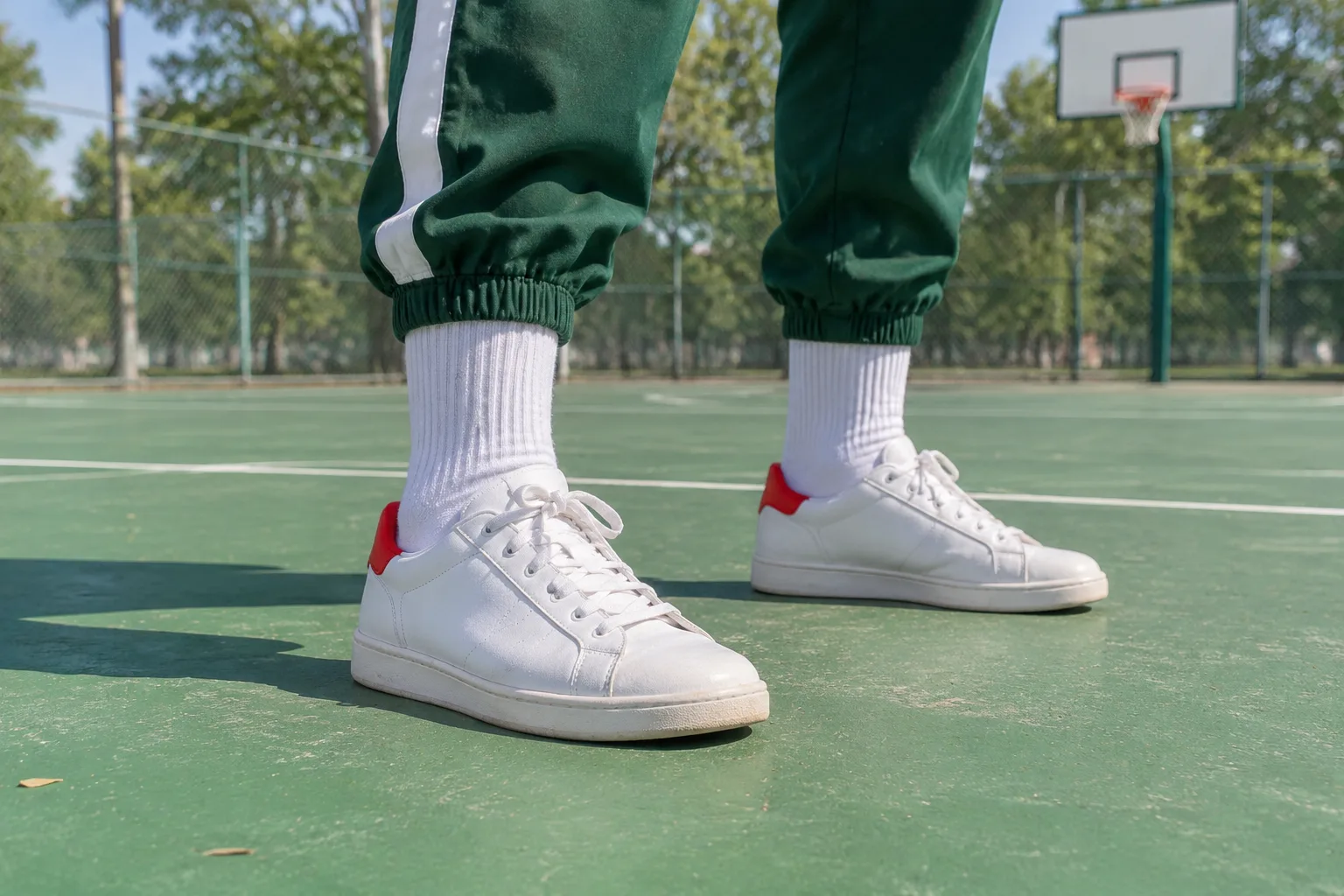
The Sock Detail That Finishes a Sporty Look
A white cotton crew sock, pulled up two inches above the collar of a running shoe, is the single most reliable signal that an outfit was assembled with care. Not the sneaker itself. Not the watch, not the track jacket with the carefully rolled sleeve. The sock. It sits at the ankle, an afterthought to most people and the whole game to the ones paying attention, and it either completes the silhouette or quietly ruins it.
The detail is small enough that it reads as accidental. That is the point. A sporty look built on logos and loud color announces its ambition. A sporty look finished at the ankle simply looks correct, as if the person got dressed without thinking about it and happened to land on the right answer. Nobody compliments the sock directly. They compliment the whole thing and cannot say why.
The line where the sock meets the shoe
Look at the gap between the top of a sneaker and the hem of a trouser. It is a narrow band, maybe an inch and a half of exposed ankle on a cropped pant, more on a raised cuff. That band is where the eye lands when it scans a person from the ground up. A bare ankle there reads casual, a little undone, fine for the beach. A sock that appears with intention reads finished. The difference between the two is entirely about proportion and color, and it takes almost no effort to get right.
The classic mistake is the no-show sock with a sporty outfit. It is the default choice because it is invisible, and invisible feels safe. In practice it creates a small dead zone at the ankle, a patch of skin that interrupts the line between the pant and the shoe and makes the whole assembly look like it was never quite resolved. The sock that shows, even a little, closes that gap.
Why the white crew sock keeps winning
White cotton, ribbed, with a band at the top that sits just above the shoe collar. This is the sock that carried tennis in the 1970s and 1980s and never really left, and its persistence is not nostalgia. White reads clean against almost any sneaker, from a plain canvas low-top to a chunky grey runner. It picks up the white of a sole or a logo and ties the bottom of the outfit to the top. It photographs well, which matters more now than it used to.
The ribbing matters more than people give it credit for. A flat knit sock slumps and wrinkles at the ankle after twenty minutes of walking. A ribbed sock holds its shape, keeps a crisp edge at the top, and gives the exposed band a bit of texture that catches light. That texture is the difference between a sock that looks deliberate and a sock that looks like it was pulled out of a drawer in the dark.
There is a practical argument buried under the aesthetic one. A crew sock cushions the heel and the achilles where a sneaker collar rubs, and it keeps the shoe from feeling loose around the ankle on a long walk. The people who wear them every day tend to arrive at the style through comfort first and notice the look second. That order of discovery is probably why the detail holds up: it was never purely decorative.
Matching the sock to the sneaker's volume
A slim canvas sneaker wants a lighter sock, a thin cotton crew with a narrow band. A chunky trail runner or a retro basketball shoe wants a heavier ribbed sock with a wider cuff, because the shoe itself has visual weight and a delicate sock underneath it looks like a mistake. The sock should feel like it belongs to the same family as the shoe. Pairing a thick sock with a wafer-thin plimsoll makes the foot look like it is wearing a sweater.
Height is the other lever. The safe zone sits roughly two to three fingers above the shoe collar. Lower than that and the sock disappears when the pant falls. Higher, up toward mid-calf, and the look shifts from sporty to something closer to a school uniform or a cycling kit, which can work but is a different statement. The two-finger rule keeps the detail visible without turning it into the main event.
Color beyond white
White is the default because it is the hardest to get wrong. A cream or oatmeal sock softens the look and pairs well with earth-toned sneakers and washed-out denim. A single stripe at the cuff, navy or forest green, adds a small hit of color that echoes a jacket or a cap without shouting. These are the moves that make the detail feel personal rather than prescribed.
What tends to fail is the matching sock and shoe in an identical bright color. An all-red sock with an all-red sneaker looks like a uniform, and the eye reads it as a set rather than a choice. The stronger play is contrast held in check: a white sock against a dark shoe, a grey sock against a white one, a sock with one accent line that picks up something worn above the waist. Restraint at the ankle lets the rest of the outfit breathe.
The fabric question
Cotton is the right call for most of the year. It breathes, it holds a crisp edge, and it has a matte finish that sits well against leather and canvas. A cotton-synthetic blend holds up better through repeated washing and keeps its shape longer, which matters if the sock is going to be visible every day. Pure synthetic athletic socks have their place in actual training, but the sheen and the compression fit read as gym gear when worn with a casual outfit, and the look turns functional in a way that undercuts the whole point.
Wool is the quiet upgrade for cold weather. A fine merino crew in charcoal or oatmeal under a sneaker and a heavy trouser looks considered, and it performs better than cotton when the sock gets damp. The cost is higher and the care is fussier, but a person who wears the same three pairs of socks all winter will find the math works out.
What the sock does to the trouser
The sock only reads if the pant hem gives it room. A full-break trouser that pools on the shoe hides the ankle entirely and makes the whole exercise pointless. A slight crop, a single cuff, or a hem that stops just above the shoe collar is what exposes the detail. This is why the sporty look tends to pair with tapered or straight trousers that end cleanly, and why the same sock under a baggy, dragging hem disappears without a trace.
There is a version of this with shorts, and it works on the same principle: the sock fills the space between the hem and the shoe and gives the leg a finished bottom edge. A mid-length short with a crew sock and a low-top sneaker is one of the most durable warm-weather combinations available, and it has been for decades because the proportions simply hold.
The two-dollar detail that carries a two-hundred-dollar outfit
Spend an afternoon watching people walk through a city and count how many sporty outfits fall apart at the ankle. The sneakers are right, the trousers are right, the jacket is right, and then there is a bare sliver of skin or a sagging no-show sock, and the whole thing reads as unfinished. The fix costs less than a coffee and takes no styling skill. It is the cheapest upgrade in menswear and one of the most overlooked, precisely because it is so small that nobody thinks to look.
A drawer of six identical white ribbed crews, washed and stacked, solves the problem permanently. The person who owns them stops thinking about socks in the morning, pulls a pair without looking, and walks out finished every single time. The detail stops being a decision and becomes a habit, which is the only way a small thing like this ever really sticks.
The sock does not need to be expensive, does not need a logo, and does not need to be explained. It needs to show, to hold its shape, and to match the weight of the shoe above it. Get those three things right and the outfit closes at the bottom the way a good sentence closes at the period. The rest of the look can be as loud or as plain as the wearer likes. The ankle has already done its job.