

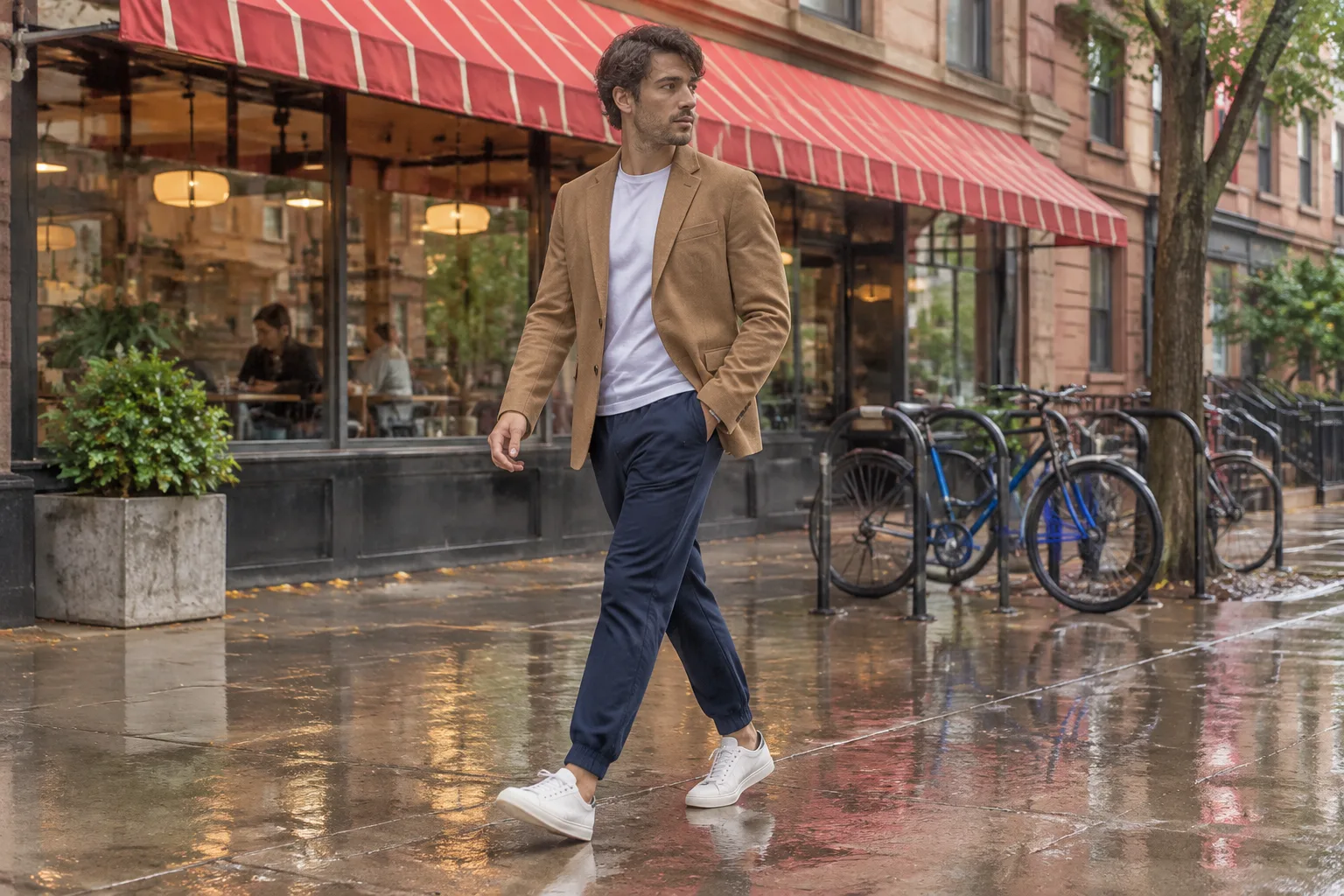
Track Pants Off the Field: A Daily Styling Guide
The pair of track pants hanging in the closet is the most democratic garment in menswear. It costs almost nothing to own, it survives the wash cycle that destroys everything else, and it carries a set of cultural associations that shift the moment the elastic cuff leaves the house. Worn to the grocery store, it reads as surrender. Worn to a coffee shop with the right shoes, it reads as a decision. The fabric has not changed. The context has.
The styling question, then, is not whether track pants belong off the field. They already left. The question is what a person does with the associations the garment drags behind it, and how much of that drag can be managed with a jacket, a pair of socks, and a deliberate choice about the cuff.
Most track pants fall into two families, and they behave differently on a sidewalk. The tapered variety, with a narrow leg and a gathered ankle, is the one that has spent the last several years migrating through streetwear into everyday wear. The wide-leg variety, often with a side stripe and a looser drape, carries more of a retro athletic charge and needs more deliberate handling. The distinction matters because a tapered pant can pass almost anywhere, while a wide one announces itself and asks the rest of the outfit to answer.
The Cuff Decides the Outfit
Elastic at the ankle is the single most important feature a track pant brings to a daily look. It changes the silhouette, and it changes the shoe conversation. A gathered cuff sits on top of a sneaker and creates a clean break, the way a tailored trouser breaks over an oxford. A wide, open hem pools over the shoe and reads as sloppier unless the shoe is bulky enough to hold its own.
The practical result: a tapered track pant with an elastic cuff works with almost any low-profile sneaker, a canvas shoe, or a chunky runner. A wide-leg track pant wants a substantial shoe underneath, something with volume, so the hem has a platform rather than a puddle. A slim leather sneaker under a wide track pant looks like a mistake the wearer has not yet noticed.
There is a small trick with the cuff that experienced wearers use. If the elastic is loose, a person can pull the cuff up slightly so it rests above the ankle bone rather than at the top of the shoe. The leg then ends higher, the sock becomes visible, and the whole proportion changes. It is a two-second adjustment that reads as intentional.
What Goes on Top Changes the Register
Track pants have a way of pulling the entire outfit toward the gym. The counterweight is a top half that clearly belongs somewhere else. A structured jacket, a wool coat, a crisp overshirt, a knit polo that buttons to the throat: any of these tells the eye that the pants are a choice rather than a leftover.
The most reliable pairing is a track pant with a jacket that has a collar and some stiffness. A chore coat works. A bomber works. A short trench works. The jacket does not need to be expensive; it needs to have structure, because the track pant is soft and unstructured, and the eye wants contrast. Two soft pieces stacked on each other read as sleepwear.
A plain crewneck sweatshirt over track pants is the default, and it is the reason so many attempts fail. It is comfortable and it is honest, but it offers no tension. The same pants with a button-down shirt, sleeves rolled, tucked loosely at the front, look like a considered outfit from a different life. The fabric cost is the same. The impression is not.
Color Keeps the Look From Reading as Gym Kit
Heather gray and black track pants are the safe choices, and they are also the ones that most easily collapse back into athleisure. A dark navy, an olive, a faded brown, or a charcoal with some texture gives the eye something to work with. The goal is a color that could plausibly belong to a pair of trousers, because that is the association the outfit is borrowing.
Side stripes are the flashpoint. A single thin stripe in a contrasting color is a classic athletic detail and can be worn without apology. A triple stripe, a logo running down the leg, or a large printed brand mark pushes the pant firmly into sportswear and makes the rest of the outfit have to work harder. For daily wear, a plain leg or a single subtle stripe is the more flexible choice.
One useful rule: if the pant has a visible logo or a bright stripe, keep everything else quiet. If the pant is plain, the top half can carry more color or pattern. The outfit needs one place for the eye to rest, and the track pant is usually the loudest thing in the room already.
The Sock Is the Detail Most People Skip
With a gathered cuff, the sock is visible for a few inches between the hem and the shoe, and that small window carries an outsized amount of information. A white crew sock is the athletic default and reads as such. A dark sock that matches the pant leg extends the line and looks cleaner. A colored or ribbed sock adds a deliberate detail that says the wearer thought about it.
In colder months, a thicker sock in a wool or a cotton rib is both practical and visually useful. It fills the gap between cuff and shoe, which keeps the ankle warm and prevents the pant from looking like it is floating above the foot. A thin dress sock under a track pant tends to look accidental.
Layering for Weather Without Losing the Line
Track pants are thin. That is most of their appeal and most of their problem. In cool weather, the answer is a longer coat rather than a heavier pant, because a heavy track pant loses the drape that makes the garment work. A topcoat or a long parka over a track pant creates a proportion that flatters most body types: long outer layer, short narrow leg, shoe at the bottom.
The coat should end below the knee for this to work. A jacket that stops at the hip over a tapered track pant can make the legs look short, because the eye reads the jacket hem and the pant hem as two competing horizontal lines close together. A longer coat pushes the outer hem down and gives the leg room to read as a leg.
In warm weather, the track pant works with a short-sleeve shirt and a light overshirt worn open. The overshirt adds a vertical line and a bit of structure without heat. Linen or a light cotton poplin both work; a heavy flannel does not.
Where the Look Falls Apart
There are specific failure modes worth naming. The first is a track pant worn with a matching track jacket, which turns the outfit into a uniform and signals that the wearer did not change after the gym. The second is a track pant worn with a dress shoe, which creates a category collision the eye cannot resolve. The third is a track pant that is too long, pooling at the ankle, which makes the whole silhouette look tired.
A fourth failure: a track pant with a very shiny synthetic face, worn in daylight, paired with a plain t-shirt. The shine plus the plainness reads as a costume. A matte fabric, a cotton blend, or a brushed synthetic is more forgiving and looks more like a garment someone chose.
Fit matters more than brand here. A track pant that is too tight through the thigh looks like athletic wear that has shrunk. One that is too baggy through the seat looks borrowed. The right fit is close but not gripping, with enough room at the knee to bend without pulling.
A Week of Actual Outfits
Monday, a navy tapered track pant with a gathered cuff, a white oxford shirt, a gray wool overshirt, and a plain leather sneaker. The shirt collar does the work of lifting the outfit; the track pant keeps it comfortable for a long day.
Tuesday, an olive wide-leg track pant with a single side stripe, a black crewneck, a short charcoal chore coat, and a chunky runner. The wide leg needs the chunky shoe; the coat gives the top half enough weight to balance the volume below.
Wednesday, a black tapered track pant, a knit polo buttoned to the throat, a dark brown bomber, and a dark sock with a low canvas shoe. The polo is the unexpected piece; it pulls the outfit away from the gym and toward a dinner.
Thursday, a charcoal track pant, a light blue button-down worn open over a white tee, and a long navy topcoat. The coat is the whole outfit; the rest is support. This is the version of the look that works in a city in November.
Friday, a faded brown track pant, a cream sweatshirt, a denim jacket, and a white crew sock with a suede sneaker. The denim jacket has enough structure to hold the soft pant, and the brown-cream-white palette keeps the whole thing from reading as athletic.
Saturday, a gray tapered track pant, a striped long-sleeve tee, an open flannel overshirt, and a worn-in canvas sneaker. This is the most casual version that still looks deliberate, because the flannel adds a pattern the eye can follow.
Sunday, the same gray pant with a heavy knit sweater, a wool beanie, and a chunky sock over a hiking-style shoe. The sweater is oversized enough to balance the narrow leg, and the whole outfit reads as a person who has decided to be comfortable in public on purpose.
The One Purchase That Improves Every Pair
A single pair of dark, plain, mid-calf socks will do more for a track pant wardrobe than any new pant. The sock is the bridge between the cuff and the shoe, and most track pant outfits fail at that bridge. A dark sock that matches the pant leg extends the visual line of the leg down to the shoe, which makes the whole silhouette look longer and more intentional. It costs very little and it fixes the most common mistake.
The second purchase, if a person wants one, is a structured jacket in a neutral color that ends below the hip. That jacket will carry every track pant in the closet through a full season of daily wear. The pants are the easy part. The jacket and the sock are what turn a pair of track pants into an outfit that someone chose to leave the house in.