
Travel Sneakers: Pairs That Survive Airports and Long Walks
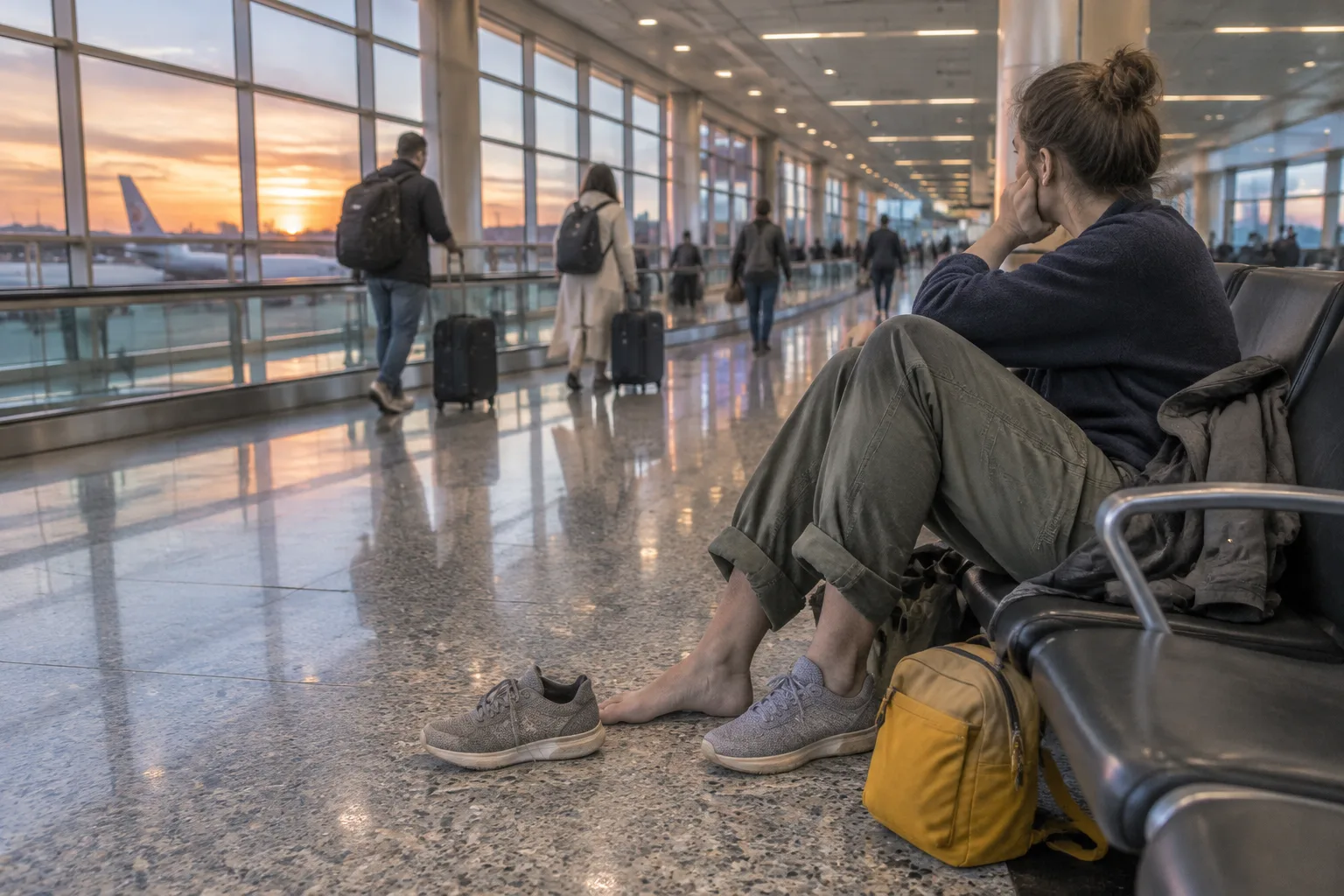
Airport flooring is a conspiracy against feet. Terrazzo concourses, moving walkway treads, those polished granite expanses between security and the gate: each surface is engineered to reflect light and punish the plantar fascia. A traveler clears 8,000 to 12,000 steps before boarding, then sits in a pressurized tube for hours with ankles the size of dinner rolls. The sneaker that survives this has to do two contradictory jobs at once, cushioning hard pavement and staying light enough to slip off at a checkpoint without a wrestling match.
Most sneakers are built for one or the other. Gym shoes cushion but look like gym shoes. Fashion sneakers photograph well but go flat by the second concourse. The pairs that actually work live in a narrow band between those poles, and the band is knowable. Four or five models have earned reputations among flight crews, tour guides, and people who walk cities for a living. The reputations are mostly deserved, and the reasons are specific.
What follows is a working shortlist, sorted by the kind of trip rather than by brand prestige. Sizing quirks, break-in periods, and the small failures that show up at 30,000 feet get equal billing with the on-paper specs, because a sneaker is judged by hour nine, not by the first fitting.
The Compression Problem On Long Flights
Cabins sit at the equivalent of 6,000 to 8,000 feet of altitude, and the body responds by shifting fluid into the legs. Feet swell measurably over a long haul. A sneaker that fit perfectly at the departure gate can feel like a vise over the Atlantic.
The fix is a roomy toe box and a knit or mesh upper with some give. Leather looks better in the lounge and behaves worse in the air. A half size up is the standard advice, but the better rule is to buy for the swollen foot and lace tighter on the ground. Anyone who has pried a stiff shoe off a numb foot after a red-eye understands the difference.
Slip-on styles have a real advantage here, though the floppy ones sacrifice support. The sweet spot is a shoe with a structured heel counter and a stretch collar, easy to kick off under the seat and easy to step back into when the beverage cart arrives.
Nike Air Zoom Pegasus: The Default Answer
The Pegasus has been in continuous production since the early 1980s, which is longer than most airlines have existed in their current form. That longevity makes it the safest recommendation in the category. The current versions run a full-length Air unit under a foam midsole, and the ride is firm enough to feel stable on tile but soft enough to absorb a full day of museum floors.
The upper is where the Pegasus earns its airport stripes. Engineered mesh breathes, dries fast after a puddle, and takes a scuff without showing it. The shoe weighs in around 10 ounces in a men's size 10, light enough to pack and substantial enough to wear for a 15,000-step day.
Two caveats. The Pegasus runs narrow through the midfoot, so wide-footed travelers should look at the wide sizing or move on. And the outsole rubber, while durable on pavement, is not built for wet cobblestones. A traveler headed to Lisbon in November should pack something with more tread.
Hoka Clifton: Maximum Cushion, Specific Trade-offs
Hoka built its reputation on oversized midsoles, and the Clifton is the purest expression of the idea. The stack height is dramatic, the rocker geometry rolls a walker forward, and the foam is soft in a way that reads as luxurious on the first mile and slightly vague on the tenth.
For airport travel specifically, the Clifton has one clear advantage: it makes hard flooring feel softer than it has any right to. Concourse tile is brutal, and the Clifton turns it into something closer to a running track. Flight attendants wear them for a reason.
The trade-offs are real. The shoe is bulky, which makes it awkward to pack and slightly clownish with slim trousers. The soft foam compresses over time, so a pair used daily will lose its cushioned feel within a year. And the rocker takes some getting used to on stairs. A traveler who splits time between terminals and cobblestone old towns may find the Clifton too much shoe for the second half of the trip.
Adidas Ultraboost: The Compromise That Mostly Works
The Ultraboost occupies a useful middle ground. The Boost foam, made of fused thermoplastic pellets, returns energy in a springy way that feels good on pavement and holds up better than softer foams over long distances. The knit upper is sock-like and forgiving of swelling feet.
It is heavier than the Pegasus and less cushioned than the Clifton, which sounds like a losing position until the shoe is worn for a full travel day. The combination of moderate weight and moderate cushion turns out to be the most livable compromise for a trip that mixes airports, trains, and city walking. The Continental rubber outsole grips wet surfaces better than most competitors.
The fit runs slightly narrow, and the knit upper, while comfortable, offers little structure for anyone with ankle instability. The shoe also has a distinct look that reads as athletic rather than neutral, which matters for travelers who want one pair to work with both jeans and a blazer.
Allbirds Tree Runners: The Light Packing Option
For a carry-on-only trip, weight matters more than cushion. The Allbirds Tree Runner weighs under 8 ounces, packs flat, and uses a eucalyptus fiber upper that breathes well and washes clean in a hotel sink. It is the shoe that disappears into a bag and reappears without complaint.
The trade-off is support. The midsole is thin, and a full day on airport tile will leave a walker feeling every step after about six hours. The Tree Runner works best as a second pair, something to change into after the flight or to wear on shorter travel days. As a primary shoe for a long trip, it asks too much of the feet.
The insoles are removable, which opens the door to swapping in a supportive aftermarket insole. That upgrade turns a marginal travel shoe into a genuinely capable one for another 30 or 40 dollars, and it is the single best modification available for lightweight sneakers.
The Slip-On Question At Security
PreCheck lines have made the shoe removal ritual less universal, but plenty of travelers still face a bin and a conveyor belt. Lace-up sneakers slow the process down. Slip-ons speed it up.
The best slip-on travel sneakers borrow from running designs. The Nike FlyEase line uses a collapsible heel and a zipper or strap system that allows a foot to enter without hands. The Adidas Slip-On Boost applies the same idea to the Ultraboost platform. Neither is as supportive as a laced shoe, but both clear security in seconds and handle a full day of walking without complaint.
Avoid the fashion slip-ons with flat soles and no structure. They look right in a hotel lobby and fail on a 10,000-step day. The test is simple: if the shoe can be folded in half, it will not survive a trip.
Colorways That Hide Airport Grime
White sneakers photograph beautifully and show every scuff, spill, and jet bridge smudge. A traveler who wants a pair to look presentable on day five should choose a mid-tone: grey, olive, navy, or a heathered black. These hide dirt and pair with almost everything in a capsule wardrobe.
Mesh uppers in lighter colors stain permanently. Knit uppers in darker colors clean up with a damp cloth. Leather cleans easily but creases badly. The most forgiving material for travel is a dark engineered mesh with a rubber toe cap, which takes abuse and still looks intentional.
Break-In Miles Before The Departure Date
A new sneaker on a travel day is a gamble. Even well-reviewed models have seams that rub, collars that sit too high, and heel counters that need to soften. The standard advice is to log at least 20 miles in a new pair before trusting them on a trip.
The break-in period also reveals fit problems that a five-minute try-on in a store cannot. A shoe that feels fine standing still may pinch at the flex point after a mile. A heel that seems secure may slip on an incline. These issues show up early and can be corrected with different socks, an insole swap, or lacing adjustments before they become a mid-trip problem.
Travelers who buy a new pair the week before a flight are rolling dice. The smart move is to buy a month out and wear the shoes on errands, walks, and a full workday before packing them.
Socks And Insoles Do More Than The Shoe
The sneaker gets all the attention, but the layer between foot and shoe determines comfort on a long day. Merino wool socks regulate temperature, dry fast, and resist odor over multiple wears. Cotton socks hold moisture and cause blisters. A pair of merino crew socks costs more than a pair of cotton ones and earns the difference on the first long flight.
Insoles matter equally. Most stock insoles are thin foam that compresses within weeks. A supportive aftermarket insole with arch support and a firmer heel cup can convert a mediocre sneaker into a capable travel shoe. The upgrade costs 30 to 60 dollars and takes five minutes to install. For anyone with plantar issues or a history of foot pain, it is the highest-leverage change available.
What A Two-Pair Rotation Actually Costs
The strongest argument for packing two pairs is not comfort on any single day. It is the way a rotation extends the life of both shoes. Foam midsoles need 24 hours to recover their shape after a full day of compression. Wearing the same pair every day accelerates the breakdown.
Two pairs also cover different terrains. A cushioned pair for airport days and a grippier pair for wet streets or hikes means each shoe does the job it was built for. The extra weight in the bag is a few pounds, and the payoff is measurable in both comfort and shoe longevity.
The economics work out. A single pair worn daily might last 18 months. The same pair worn every other day can last three years, because the foam recovers between wears and the upper gets a rest. The second pair pays for itself in extended life, and the travel days in between are simply better.