
Your First Athleisure Capsule, Thoughtfully Built
A capsule wardrobe of athleisure makes a promise that most clothing categories cannot: five or six pieces, mixed and matched, covering the gym, the school run, the flight, and the coffee shop without a single outfit change. The promise is real, but it fails more often than it should, and the failure is rarely about taste. It is almost always about construction drift, color commitment, and buying the fantasy version of a life rather than the actual one.
A well-built athleisure capsule starts with a hard question most guides skip: what does this wardrobe actually have to do? A person who lifts four mornings a week and works from a kitchen table needs different pieces than someone who runs, commutes on a train, and travels twice a month. The overlap between those two wardrobes is smaller than the marketing suggests. Define the job before picking the fabric.
Pick a base color that survives sweat and daylight
Every capsule needs a neutral spine. Black is the default and the safest, but it shows every fleck of lint and fades to charcoal gray after enough hot washes. Navy holds up better against wear and reads slightly more deliberate in daylight. Charcoal sits between the two and forgives a great deal. The choice matters less than the commitment: one base color, carried through the leggings, the shorts, the joggers, and the top layer.
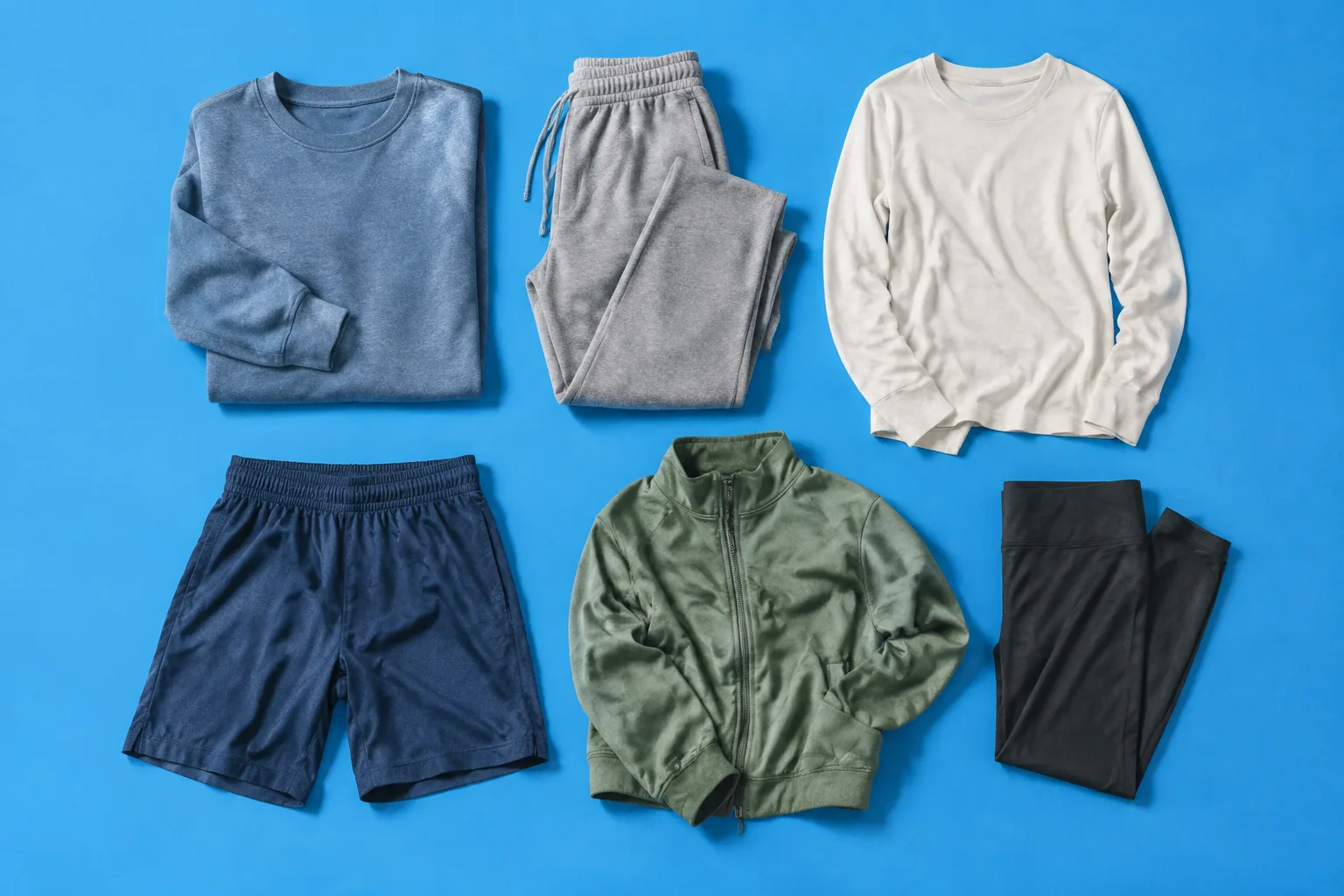
The second color should be a single accent that appears in at least two pieces, not five. A deep olive, a muted clay, a slate blue. If the accent lives only in one top, it will sit in the drawer while the neutral pieces cycle through the wash. Two pieces in the accent color is the threshold at which an outfit can actually be built around it.
This is where most first capsules die. A shopper buys one beautiful sage green hoodie, loves it, wears it twice a week, and then discovers it matches nothing else in the drawer. The fix is boring and unglamorous: buy the accent in a top and a bottom simultaneously, even if the bottom is just a pair of shorts.
The four bottoms that cover nearly every hour of the week
Four bottoms is the workable minimum, and each should have a distinct job. A full-length legging in the base color handles training and layering under everything. A 7/8 or cropped legging handles warmer days and pairs with sneakers without pooling at the ankle. A jogger in a heavier fabric covers the airport, the grocery store, and the cold morning. A pair of shorts, cut to the wearer's comfort, handles the hot months.
The specific fabric matters more than the silhouette. Leggings benefit from a dense knit with enough elastane to hold shape through a squat and enough opacity that a phone flashlight does not shine through. The hand-feel test is simple: stretch the fabric across a knuckle and check whether the skin tone shows through. If it does, the legging will fail in daylight, which is where most of them are worn.
Joggers want a heavier loopback or French terry, something with enough body to hang straight rather than cling. A jogger that clings at the thigh and pools at the ankle reads as sleepwear, no matter how good the color is. Cuff or no cuff is a personal call, but the cuff tends to look more intentional and keeps the hem clear of the floor.
Two tops that work under a jacket and alone
The top half of an athleisure capsule needs to do double duty. A fitted long-sleeve in a technical knit covers the gym, the run, and the layer-under-a-jacket scenario. A relaxed short-sleeve or tank in the accent color handles the warm days and the casual errand. Both should be cut so they can be worn untucked without looking sloppy, which usually means a hem that hits at the high hip rather than mid-thigh.
Seams are the tell. A flatlock seam at the shoulder and side sits flush against the skin and does not chafe under a backpack strap. A standard overlock seam creates a ridge that rubs after an hour. This is the kind of detail that separates a piece a person reaches for daily from one that gets retired to the bottom drawer within a month.
One mid-layer that earns its place on the plane and the trail
A single quarter-zip or full-zip mid-layer in a light fleece or a technical grid material bridges the gap between the gym and everything else. It should be thin enough to pack flat and warm enough to matter on a cool morning. The zip matters: a full zip can be opened over a t-shirt for a layered look, while a quarter-zip reads more like a training piece.
The common mistake here is buying the heaviest, plushest fleece in the store. It feels wonderful in the fitting room and becomes a furnace on the second mile of a walk. A mid-layer in a grid fleece or a light technical knit breathes, packs into a bag, and layers under a shell when the weather turns.
Shoes and a bag that hold the whole system together
Footwear is where athleisure capsules quietly fall apart. A single pair of neutral running shoes can carry the training days, the errands, and the travel, provided the color is quiet. White is the obvious choice and the one that requires the most upkeep. A bone, gray, or black pair survives longer and reads slightly more grown-up without losing the athletic register.
A second pair is worth it only if the wearer actually lifts, because a flat, stable training shoe protects the foot in a way a cushioned runner does not. A person who only walks and runs can skip the second pair entirely and put the money into a better bag.
The bag should be a single, boring, durable piece: a nylon duffel or a structured tote that holds a laptop, a change of clothes, and a water bottle without collapsing. This is the piece that turns a pile of clothes into a system. It should be the same color family as the shoes, which sounds fussy and is not. A mismatched bag is the fastest way to make a careful capsule look accidental.
Where the budget should go, and where it should not
Money in an athleisure capsule belongs in the leggings, the shoes, and the mid-layer. These are the pieces that take the most mechanical stress: the leggings stretch and recover hundreds of times, the shoes absorb impact, the mid-layer gets stuffed into bags. Cheap versions of these three fail visibly and quickly.
Tops and shorts can be bought more modestly. A basic technical tee does not need to cost much to perform well, and the difference between a mid-priced and a premium tee is often just branding and a slightly nicer neckline. Save the premium spend for the pieces that touch the ground and the joints.
The one place to spend on a top is the neckline. A ribbed collar that holds its shape after fifty washes keeps a cheap tee looking sharp, while a flimsy collar curls and dates the whole outfit. Check the collar construction before checking the price tag.
The washing routine that keeps black from going gray
An athleisure capsule lives or dies by its wash cycle. Hot water and a hot dryer break down elastane and fade dark colors faster than anything else. Cold water, a gentle cycle, and air drying extend the life of a legging by months. This is not a fussy ritual; it is the difference between a capsule that holds its color for a year and one that looks tired by spring.
Turn dark pieces inside out before washing. Use a detergent without optical brighteners, which are designed to make whites look whiter and quietly yellow dark fabrics over time. Skip the fabric softener entirely; it coats technical fibers and reduces their ability to wick moisture, which is the whole point of the fabric in the first place.
What to leave out of the first capsule
The temptation with a first capsule is to buy the exciting pieces: the matching set in a bold print, the cropped puffer, the technical vest with six pockets. These are the pieces that get worn twice and then hang in the closet while the plain black leggings do all the work. A first capsule should be deliberately dull. The personality comes later, once the spine is proven.
Matching sets are the specific trap. A printed matching set photographs beautifully and functions poorly, because the top and bottom can only be worn together to look intentional. Solid pieces mix, and mixing is what a capsule is for. Buy the set later, as a reward, once the neutral system has earned its keep through a full season.
The test of a finished athleisure capsule is simple and slightly brutal: can a person pack for a three-day trip, including one workout and one dinner, using only these pieces and a single pair of shoes? If the answer is yes, the capsule works. If the answer requires a just-in-case extra bag, the count is off by two pieces and the colors are off by one.